The Forest
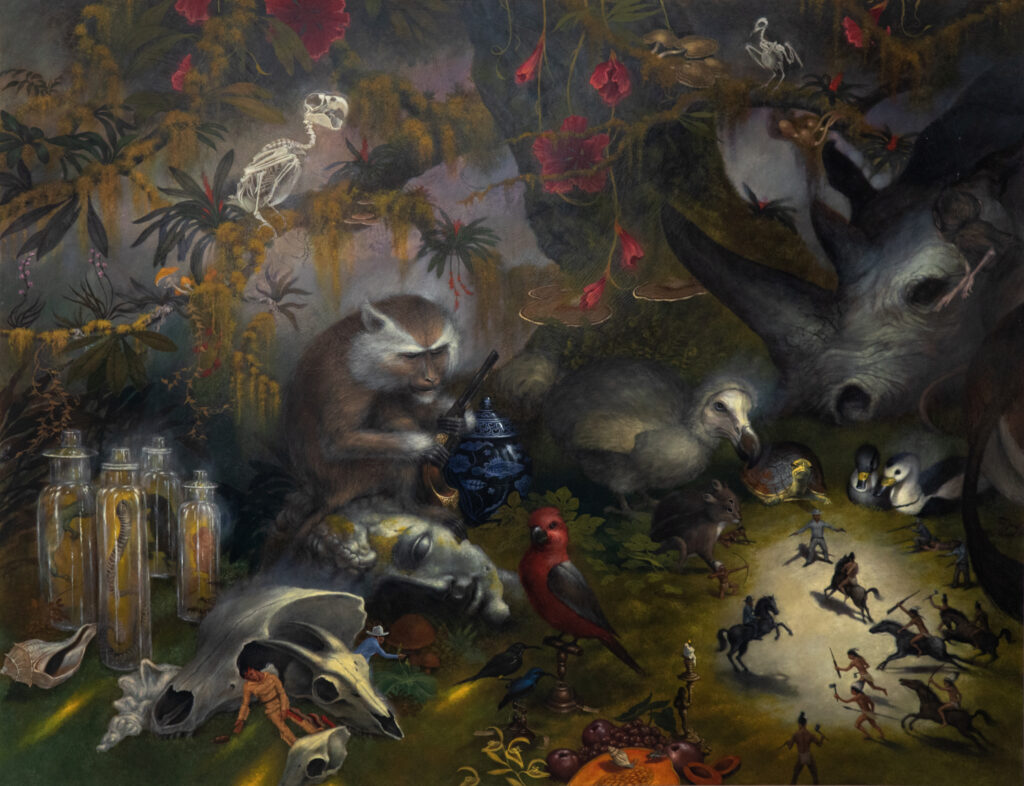
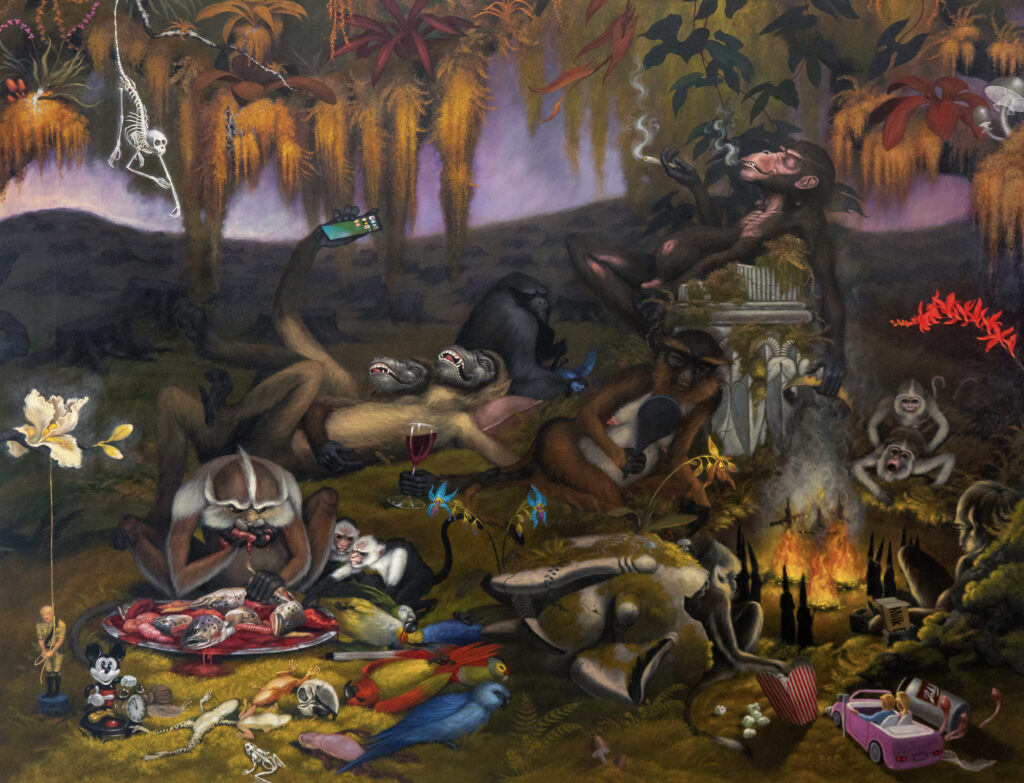
We came from the forest. We evolved in the forest. The forest lives in our psyche and in our imaginations. No matter how far we try to separate ourselves from the forest, it dwells in us as we once dwelled in it. If we destroy that forest, we destroy ourselves.
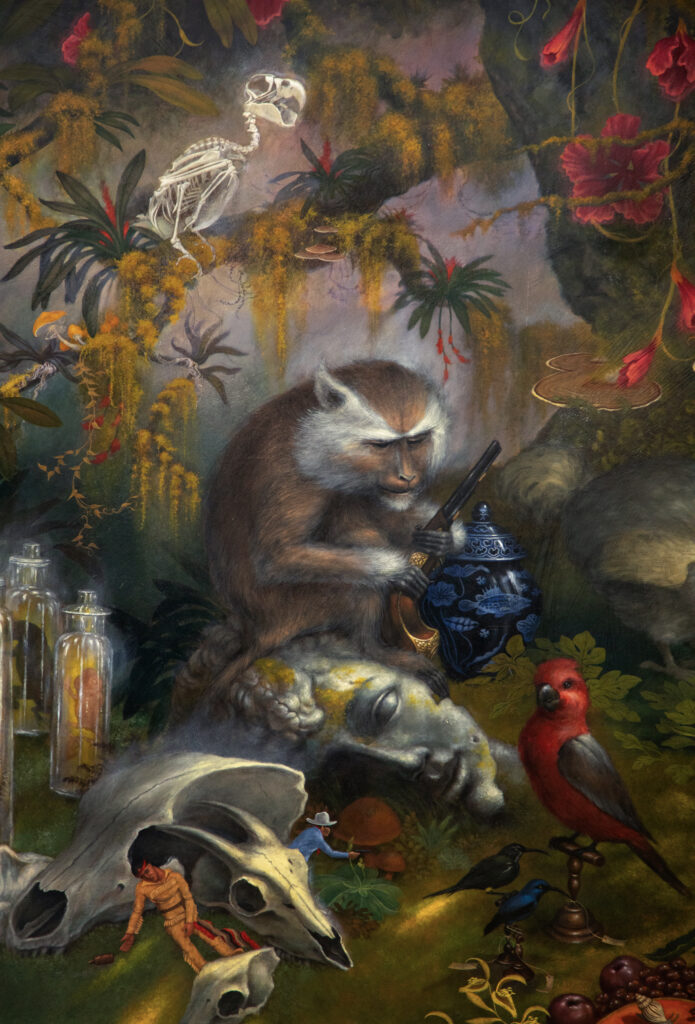
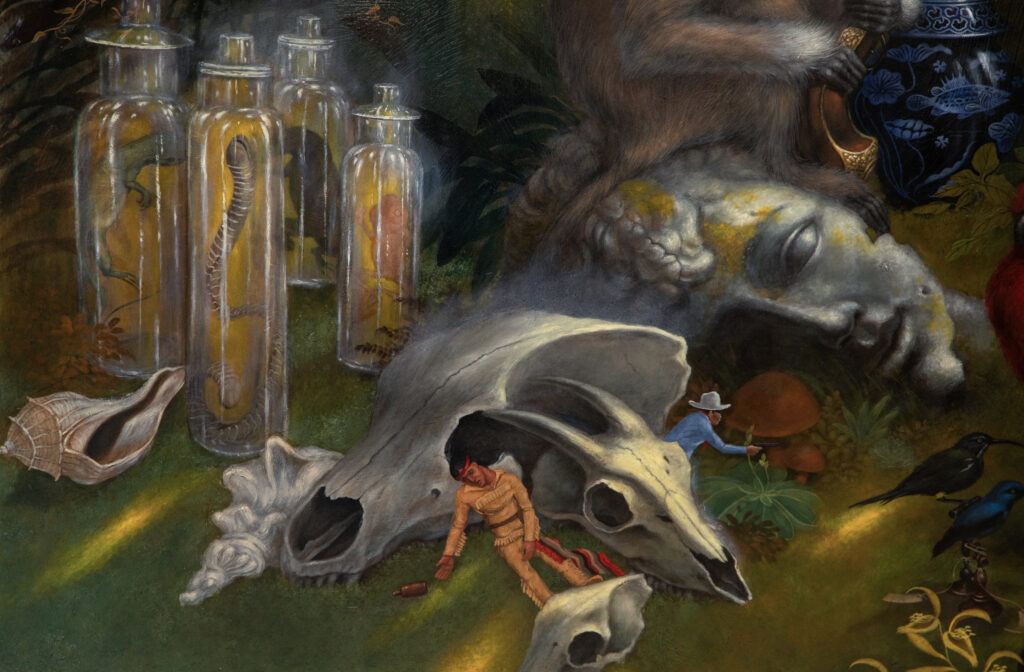
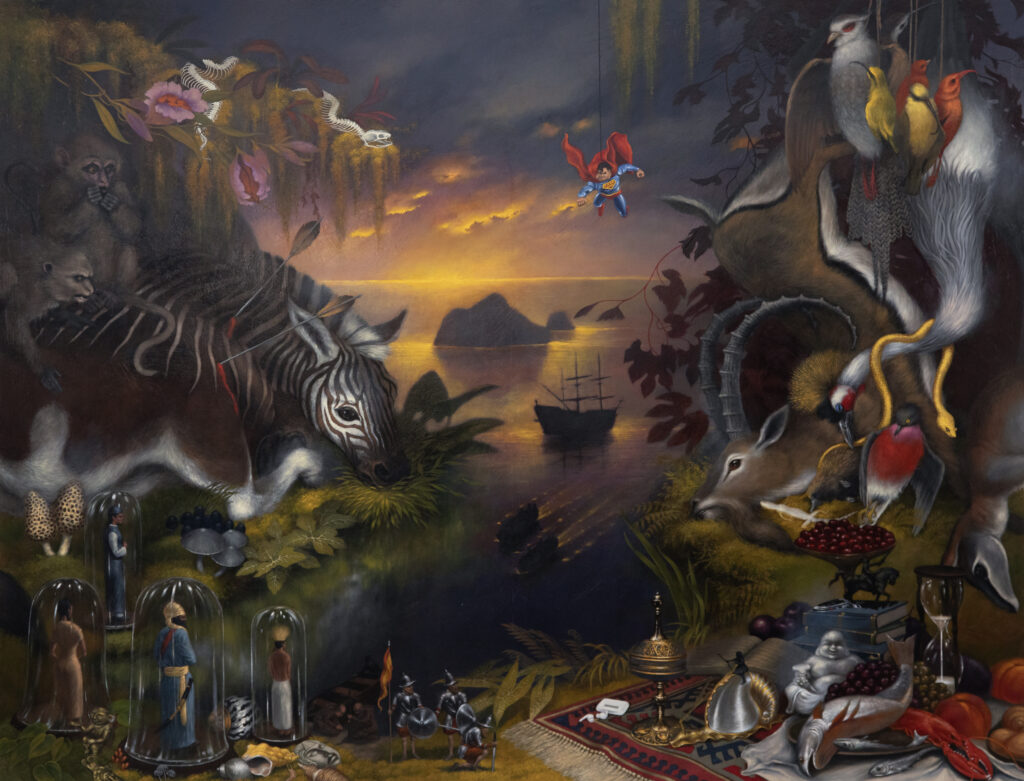
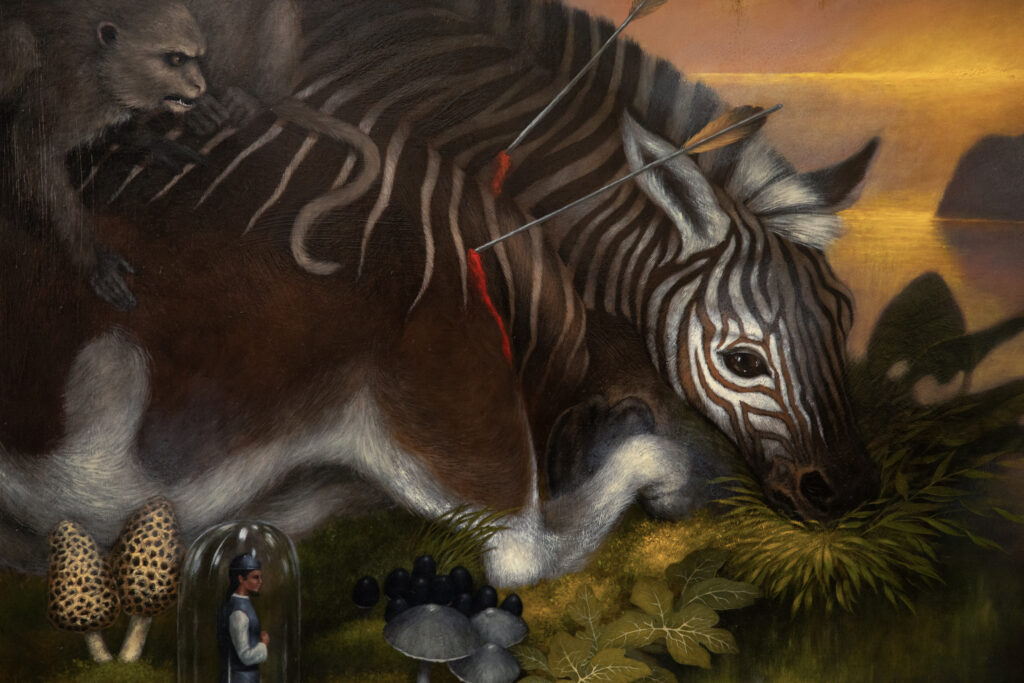
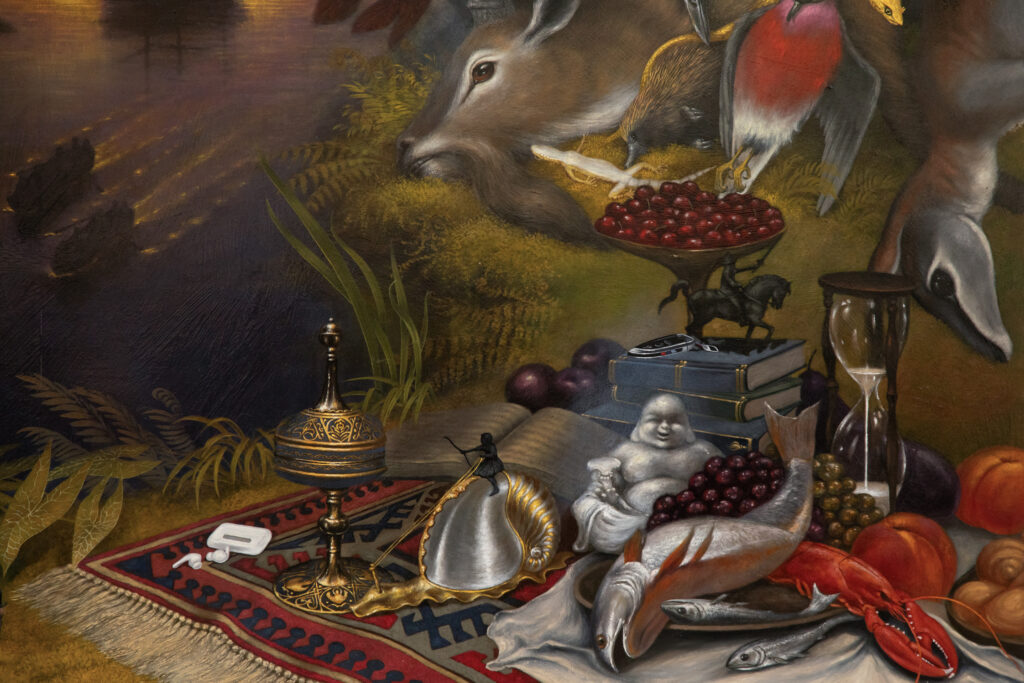
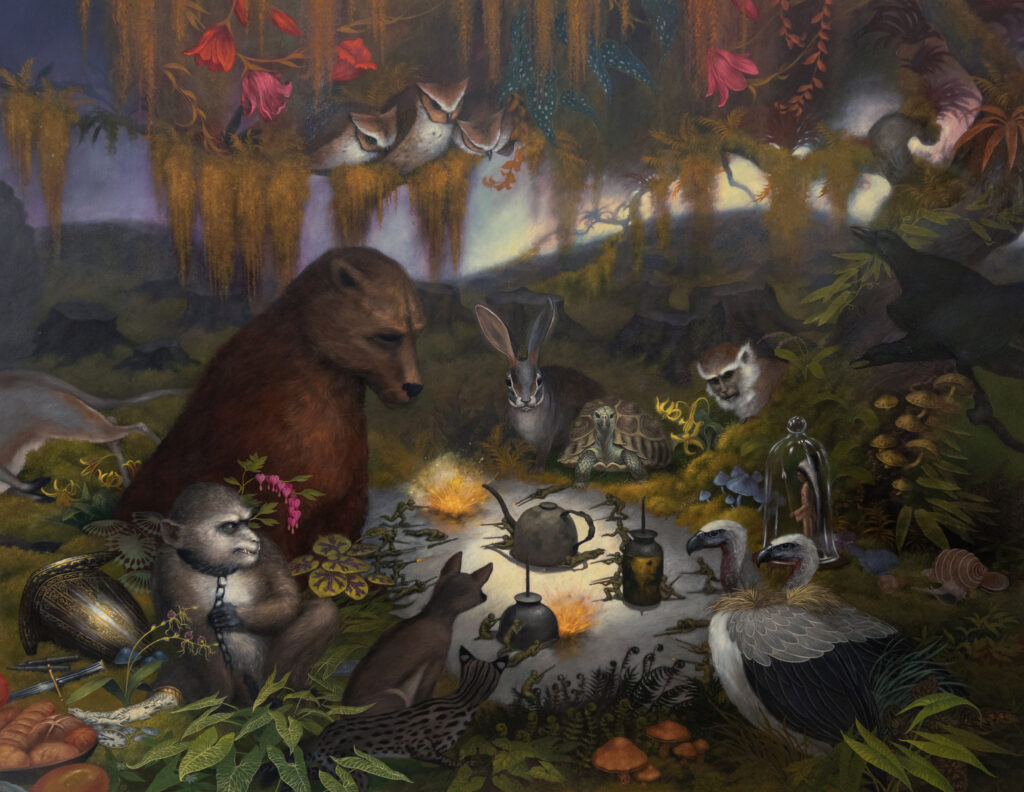
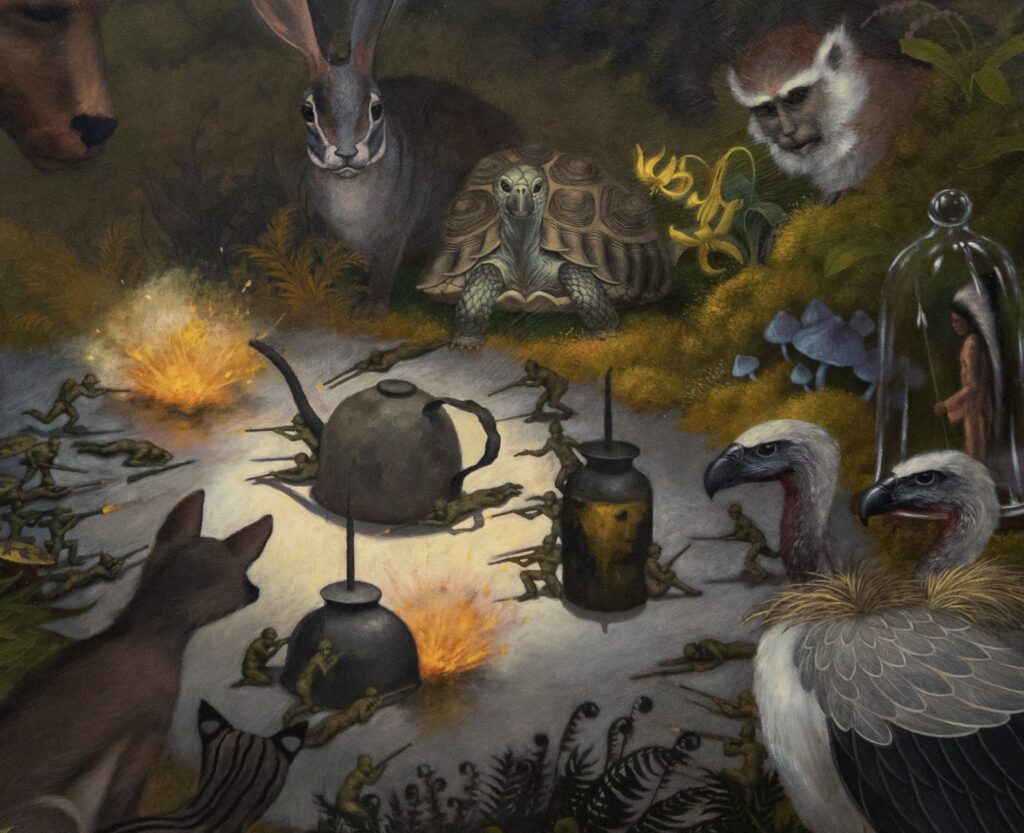
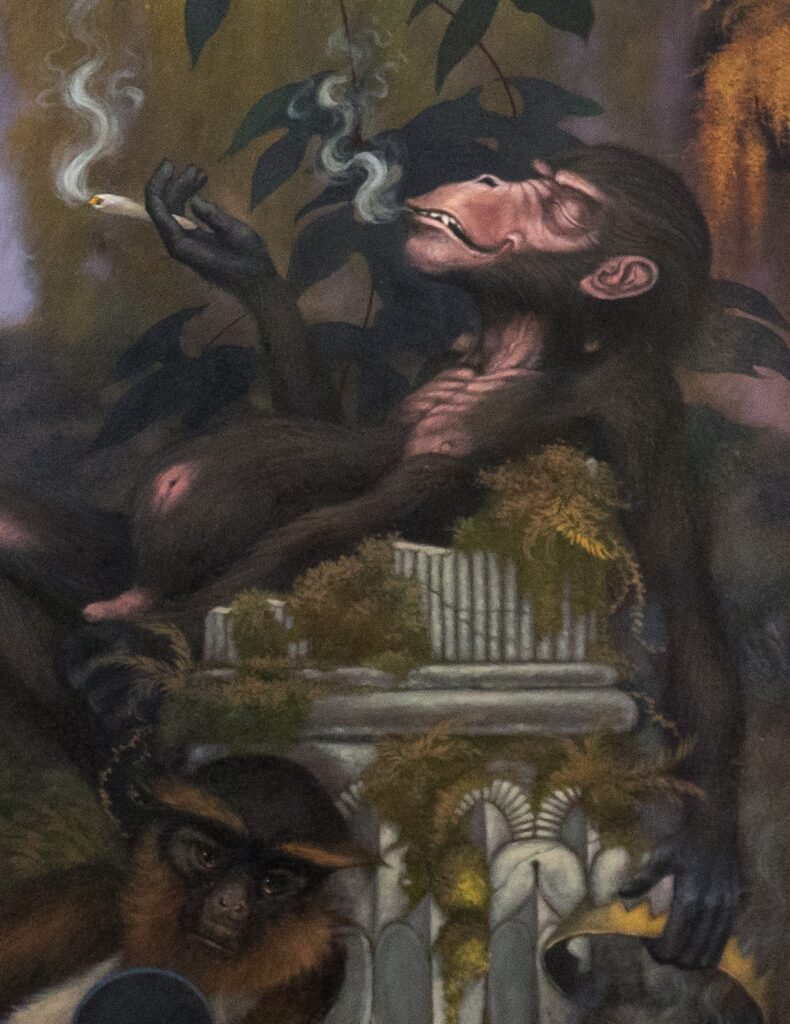
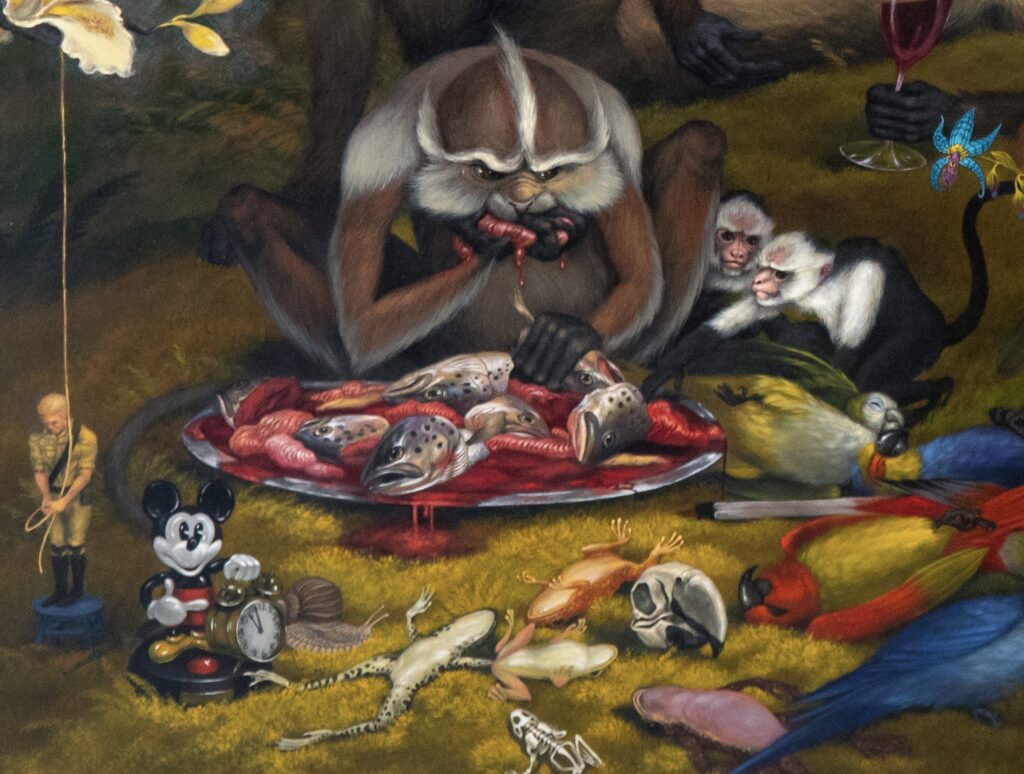
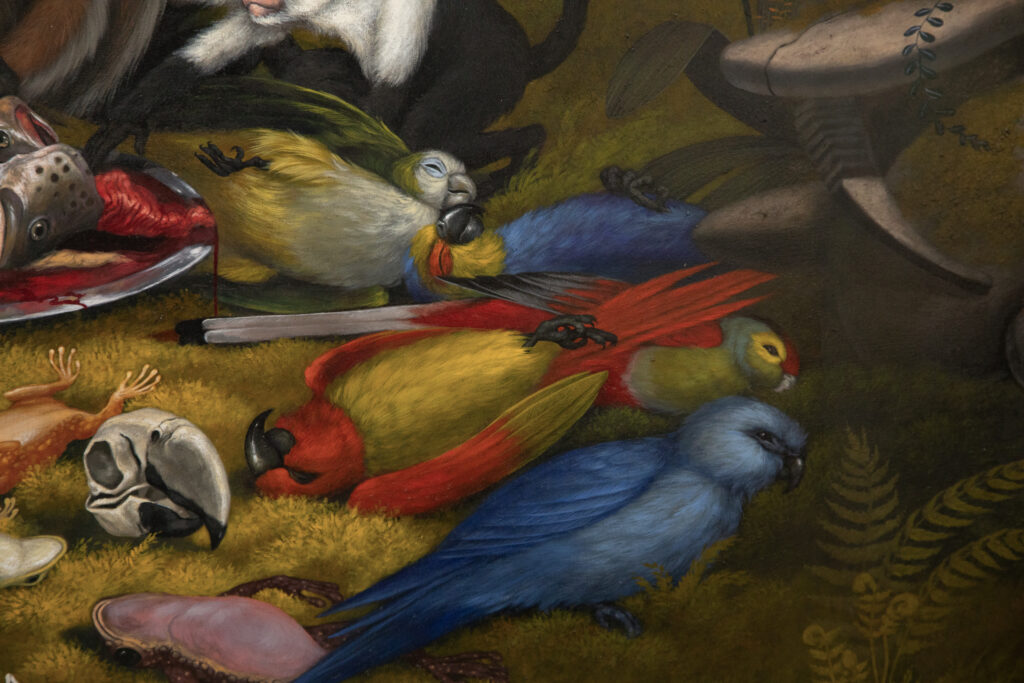
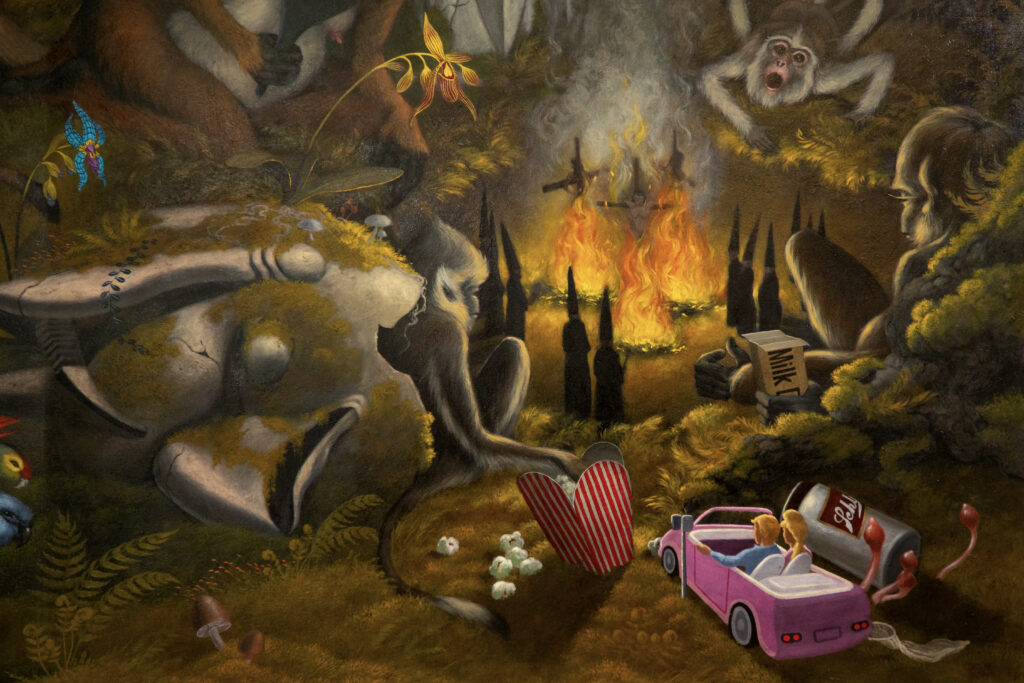
In The Forest, nothing is what we may expect. Skeletal creatures inhabit the landscape next to jars of ghostly figures floating in amber formaldehyde. Humans from ancient civilizations stare outward, trapped behind domed cloche glass. Remnants of lost cultures litter the forest floor next to skulls and weapons of war. Flora and fauna of disparate ecosystems inhabit the same forest under a dense tropical canopy. Humans are depicted in menacing Liliputian form battling each other in a series of chaotic and violent skirmishes. These waring characters duke it out in small and unnaturally lit openings in the forest as if placed on a stage. The main characters are various animals who view these skirmishes as if they were part of an audience at the Colosseum. Are they entertained or horrified? What do they think of us as they watch us bring such destruction to ourselves as well as the natural world?
Monkeys, our evolutionary cousins, take stage in the painting to represent our most human characteristics like fear, greed, cruelty, gluttony, malice, humor, envy, affection and vengeance. These monkeys still dwell in the forest and they remind us of the world from which we came as well as reminding us of what our strengths and our flaws are. The Forest is purposefully provocative and direct in its tone. It’s the type of painting where each person will relate to it in their own way depending of their point of reference and life experience because The Forest presents questions that strongly engage us but none of us really have the answers for.
The Prophets
Modern religion has provided us little guidance to the evolving threats of climate change, extinction, and the destruction of the natural world. Most of the spiritual practices that once connected us to nature were wiped out during the expansion of what have become the dominant religions. As a result, we have largely lost our spiritual connection to nature. Without that connection, we will likely fail to protect the very planet that nurtures and sustains us all.
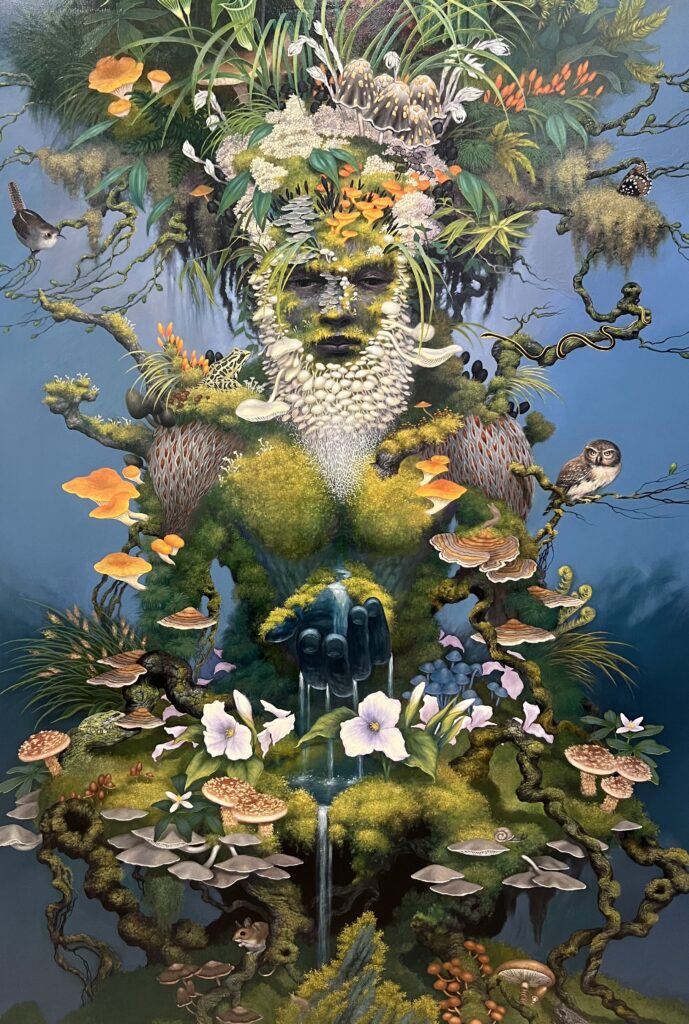
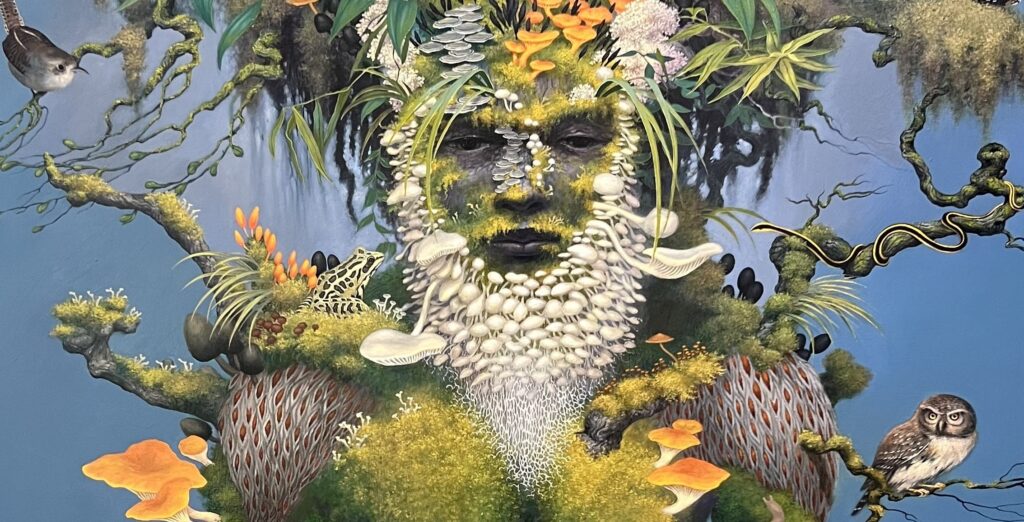
In this series of paintings, I have created a group of nature deities that offer an opportunity for new dialogue. Textured green moss and vibrantly colored mushrooms grow out the pores of a deities’ nose and ears as water flows from an unknown source from within and drips from their ancient-looking fingers. Feathers, flowers and foliage form headdresses of magnificent plumage.
We are made from the same genetic material as the creatures and ecosystems with which we share our planet. My paintings are intended to be visual representations of our inseparable connection to the natural world. These deities are a symbolic guide to show us how to save our planet, and therefore save ourselves.
We need a new understanding of our relationship to ourselves and our planet. I have created a new mythology to help guide us; a mythology that brings us back to a version of ourselves that can find harmony with our Earth and all of the other incredible species that give our existence here more meaning.
The Prophet 1
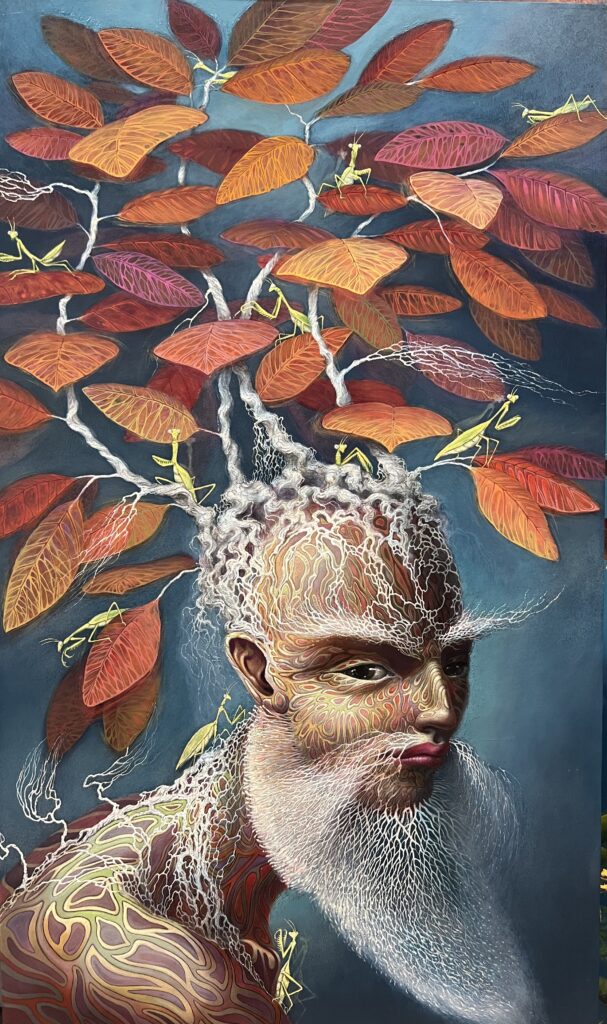
The Duke of Mantis
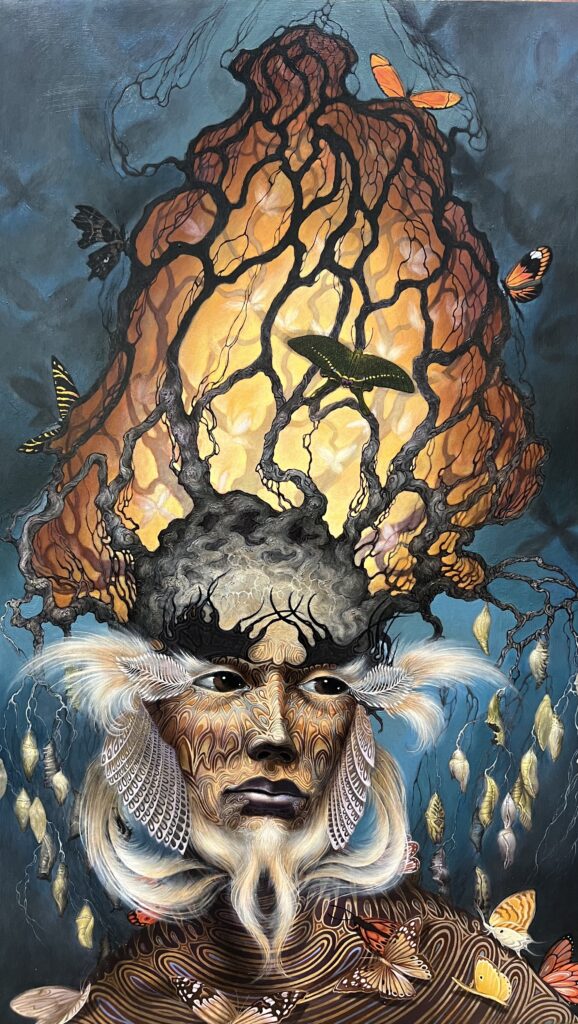
Butterfly Boy
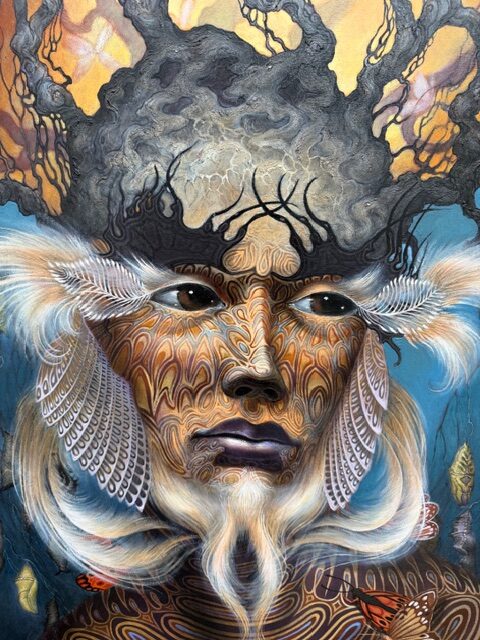
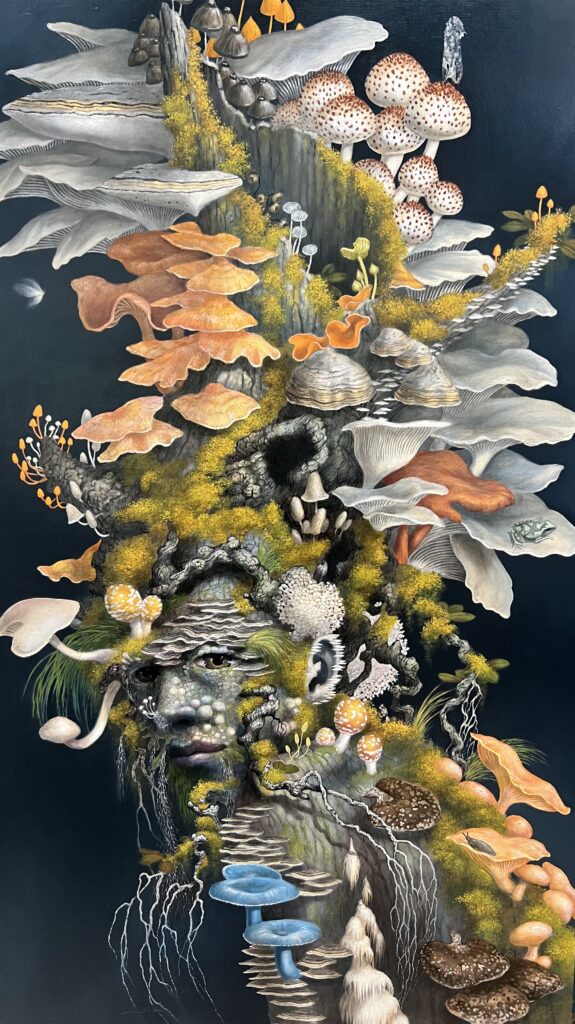
Mushroom Magi 1
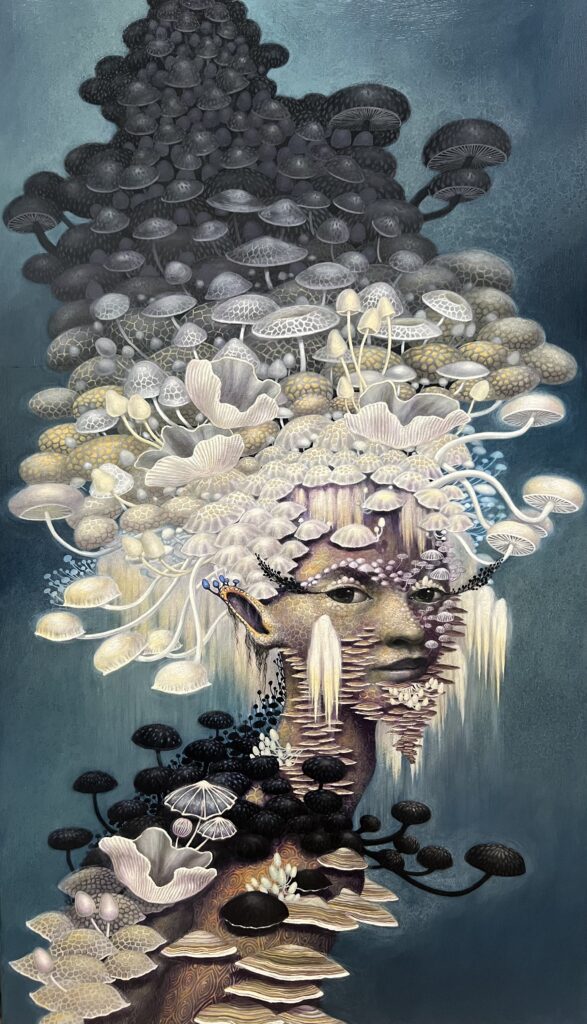
Mushroom Magi 2
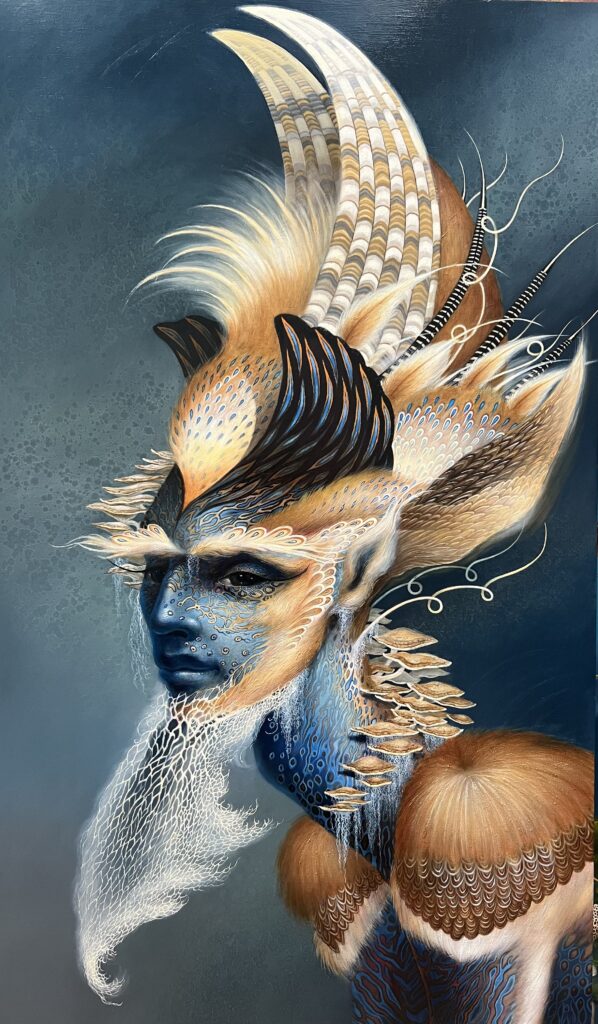
The Pheasant Pharoah
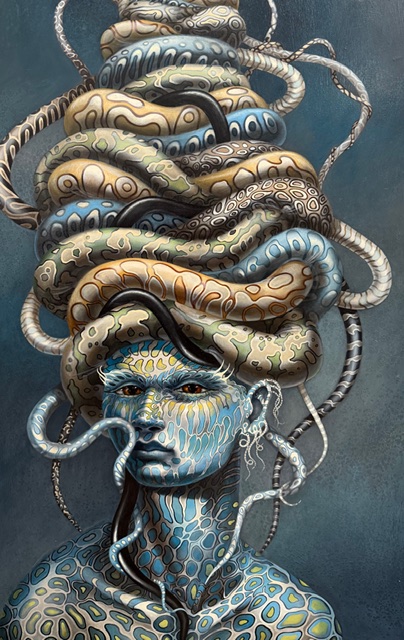
Sister Snake
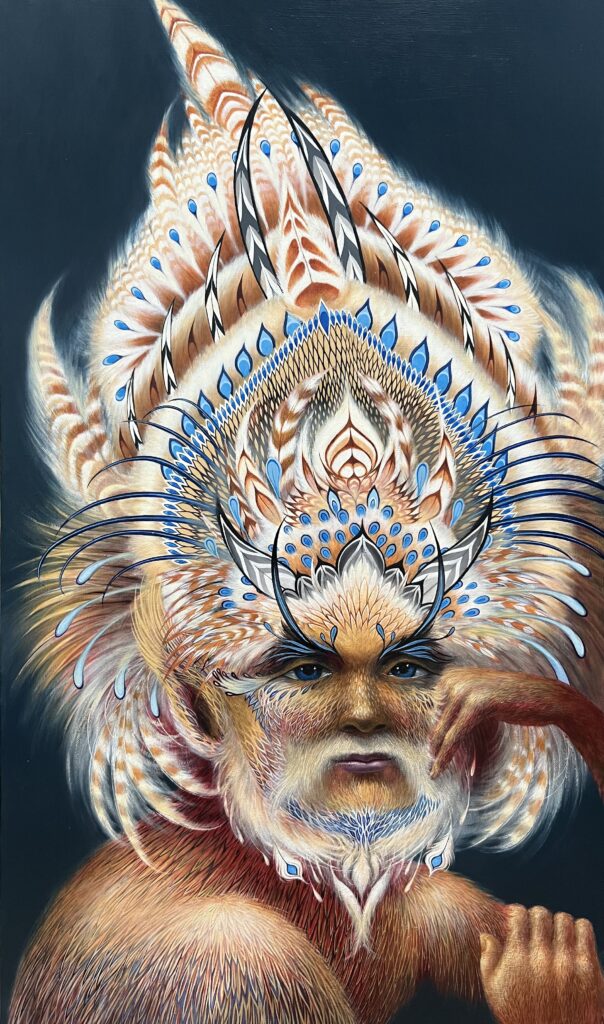
The Quail King
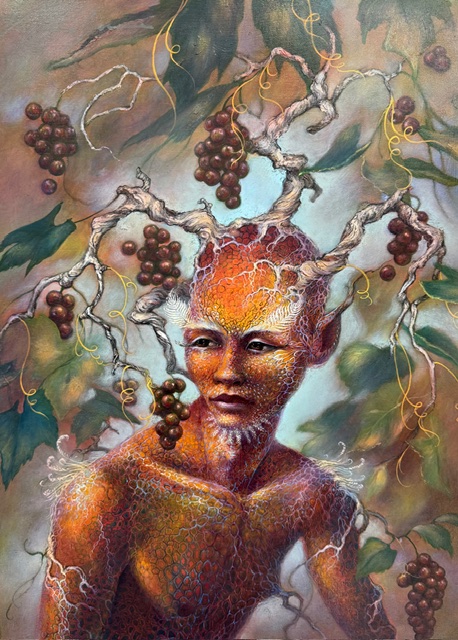
Vine
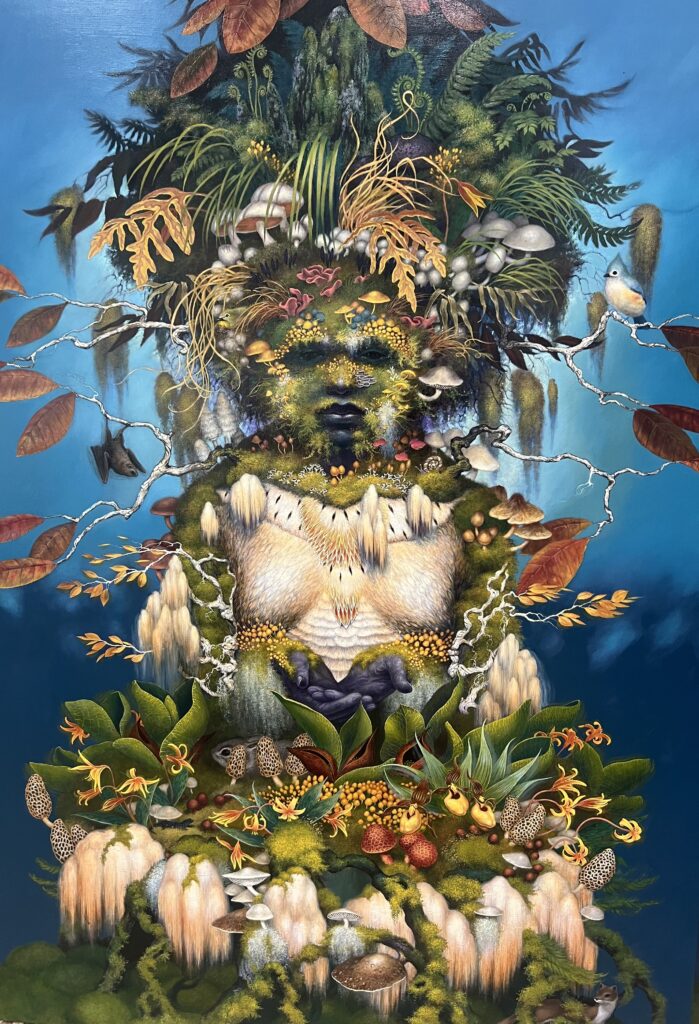
The Prophet 2 – Earth Mother
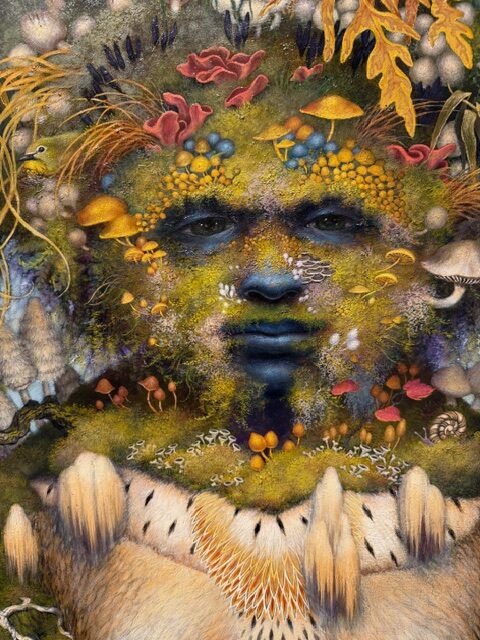
Masks, Myths and Man
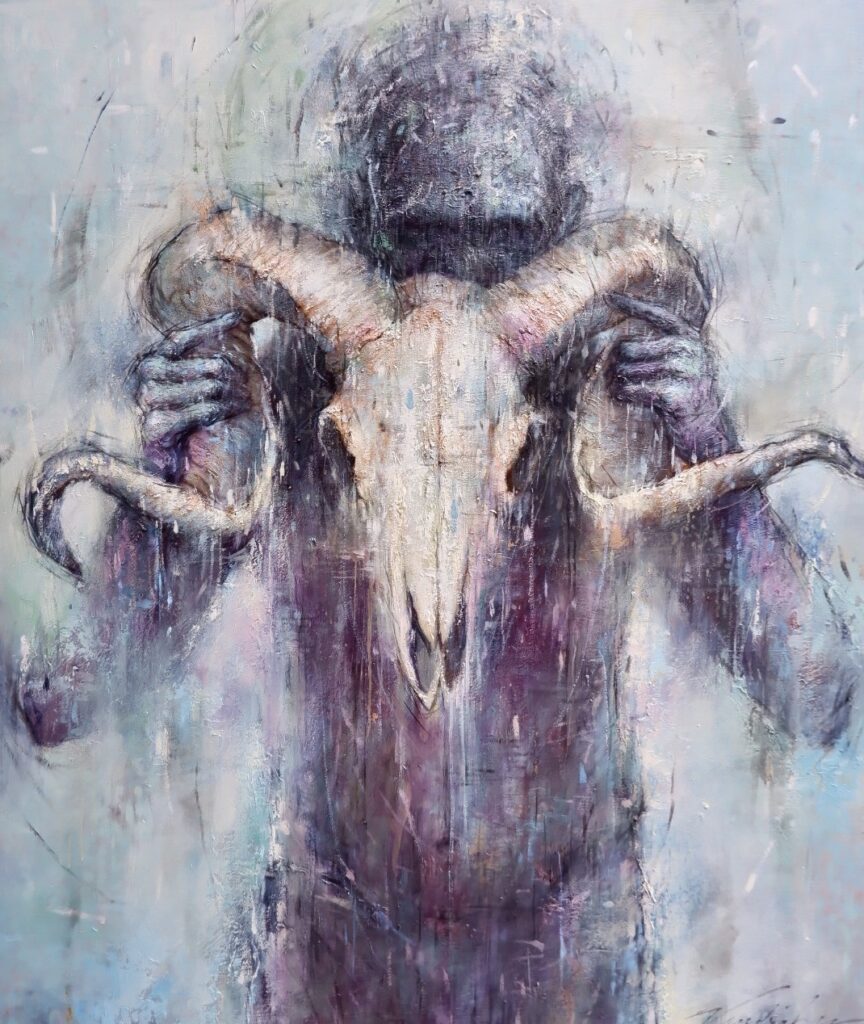
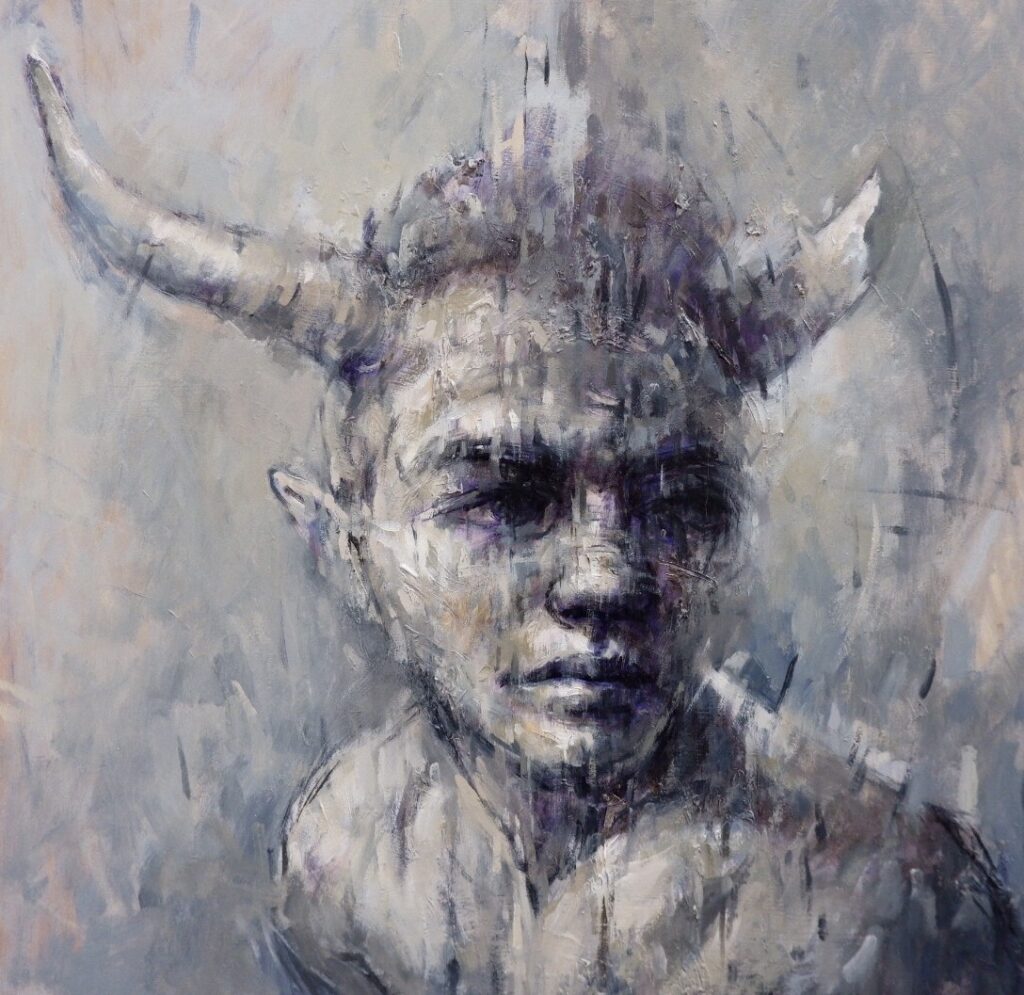
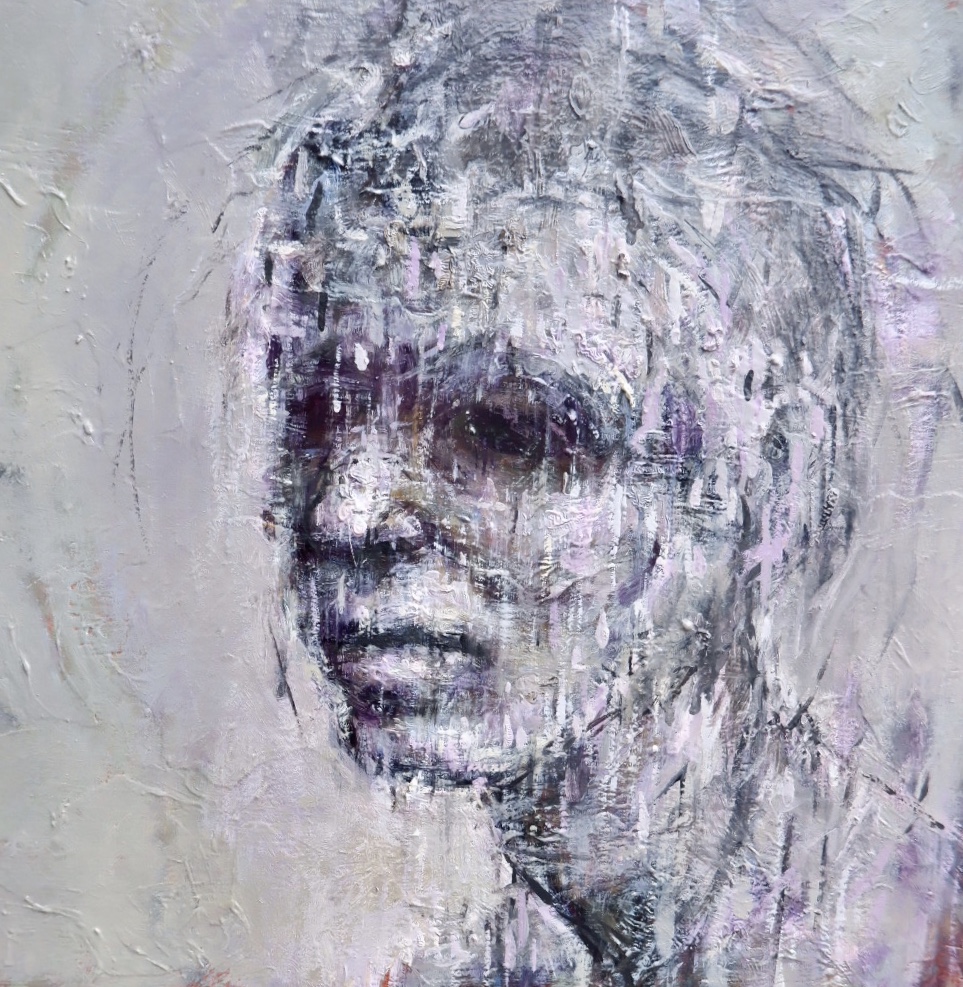
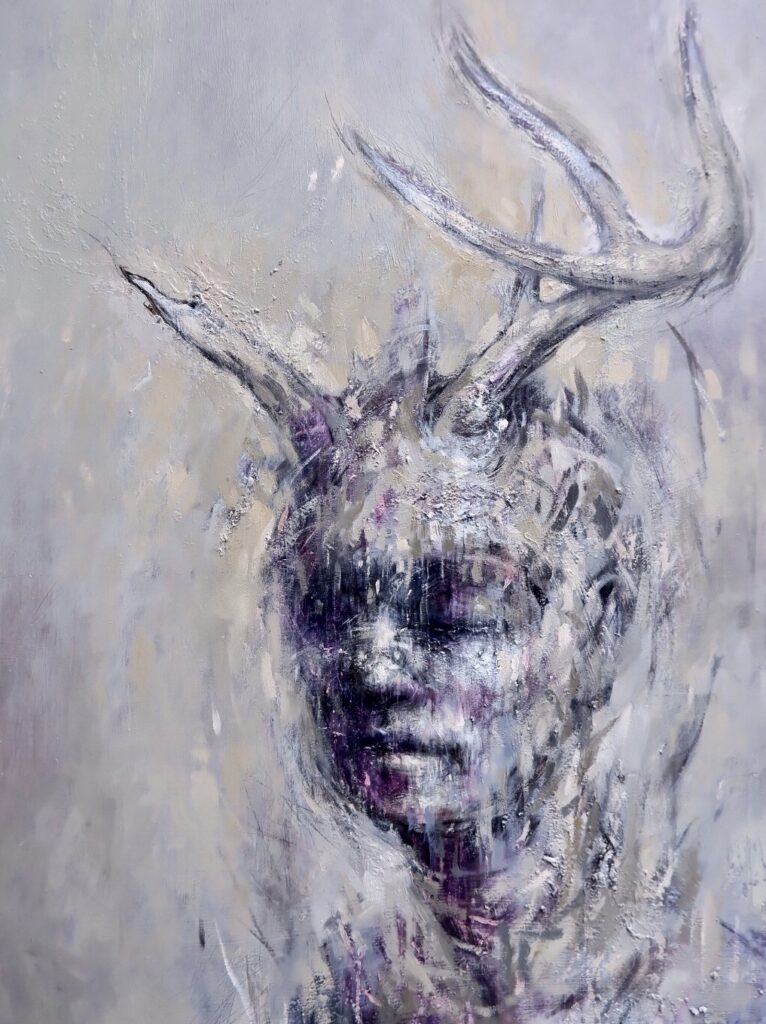
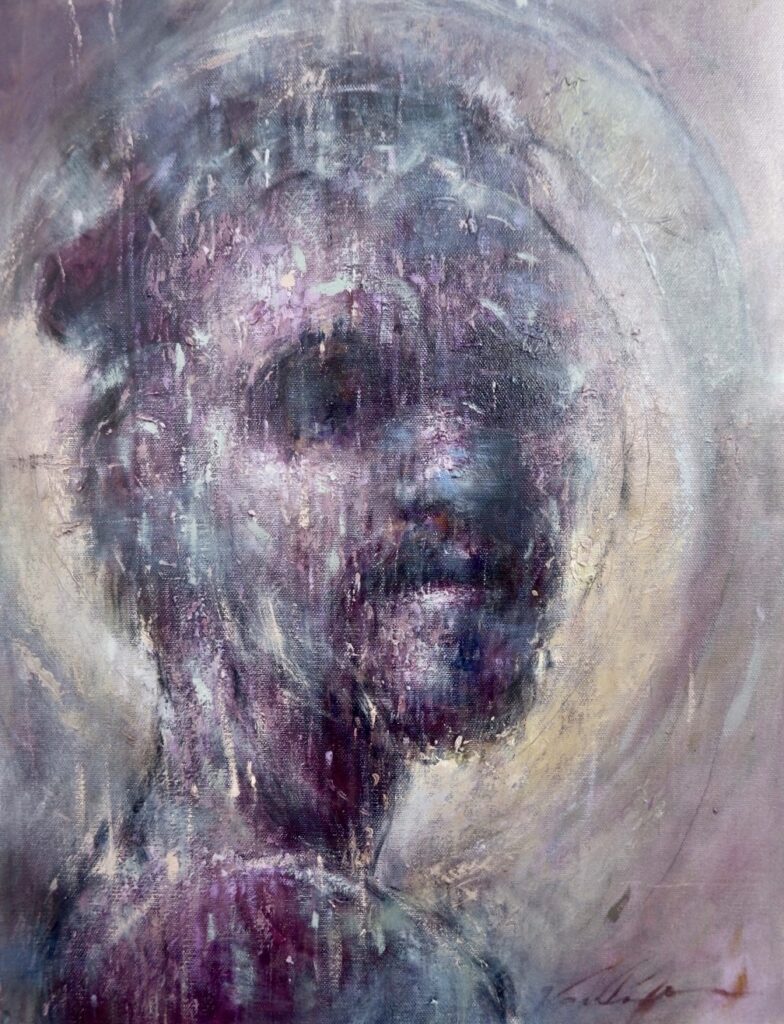
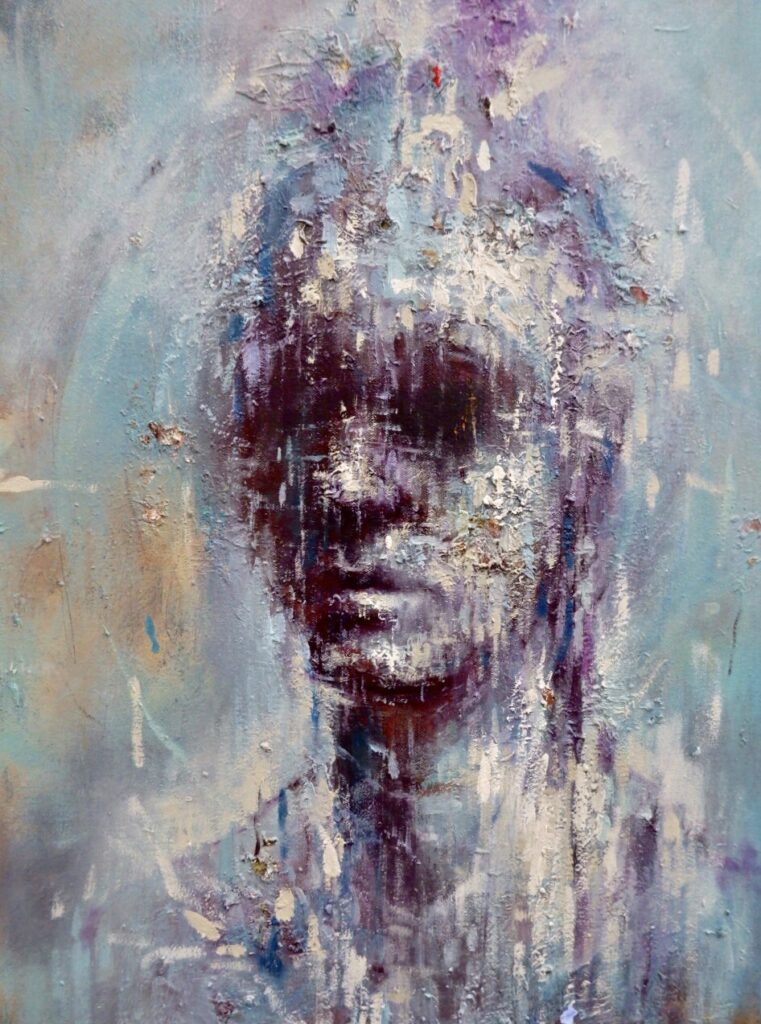
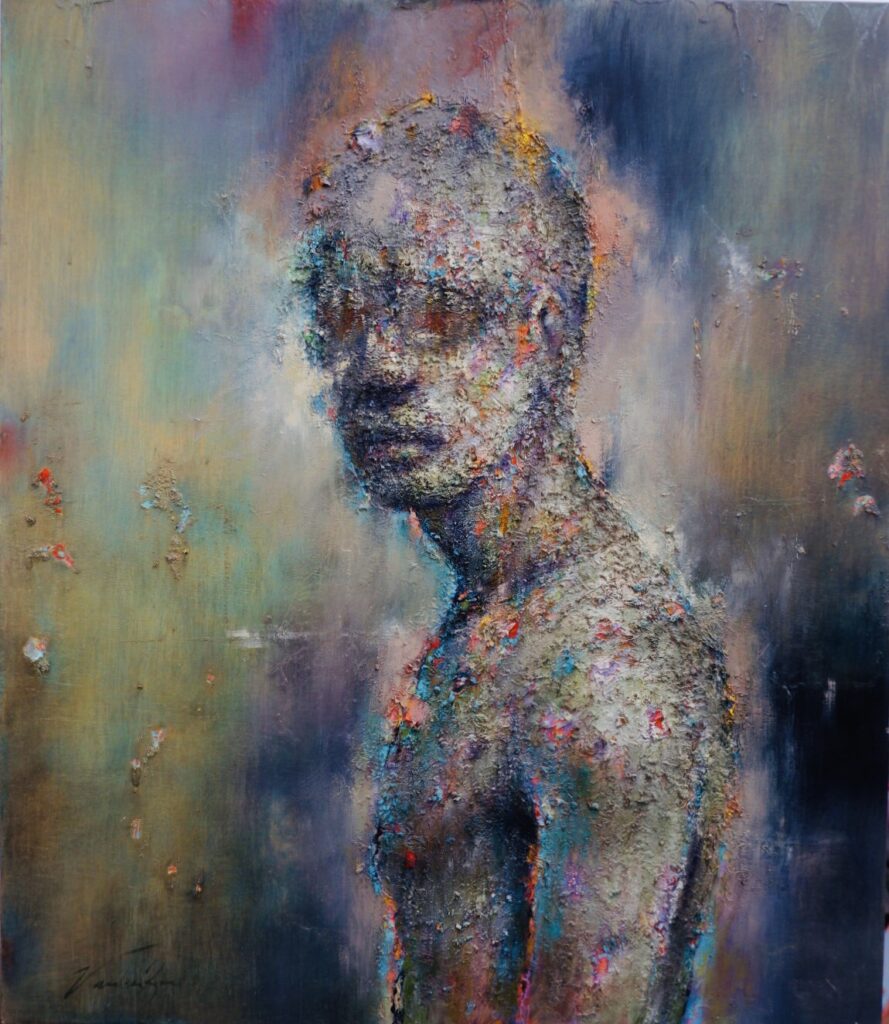
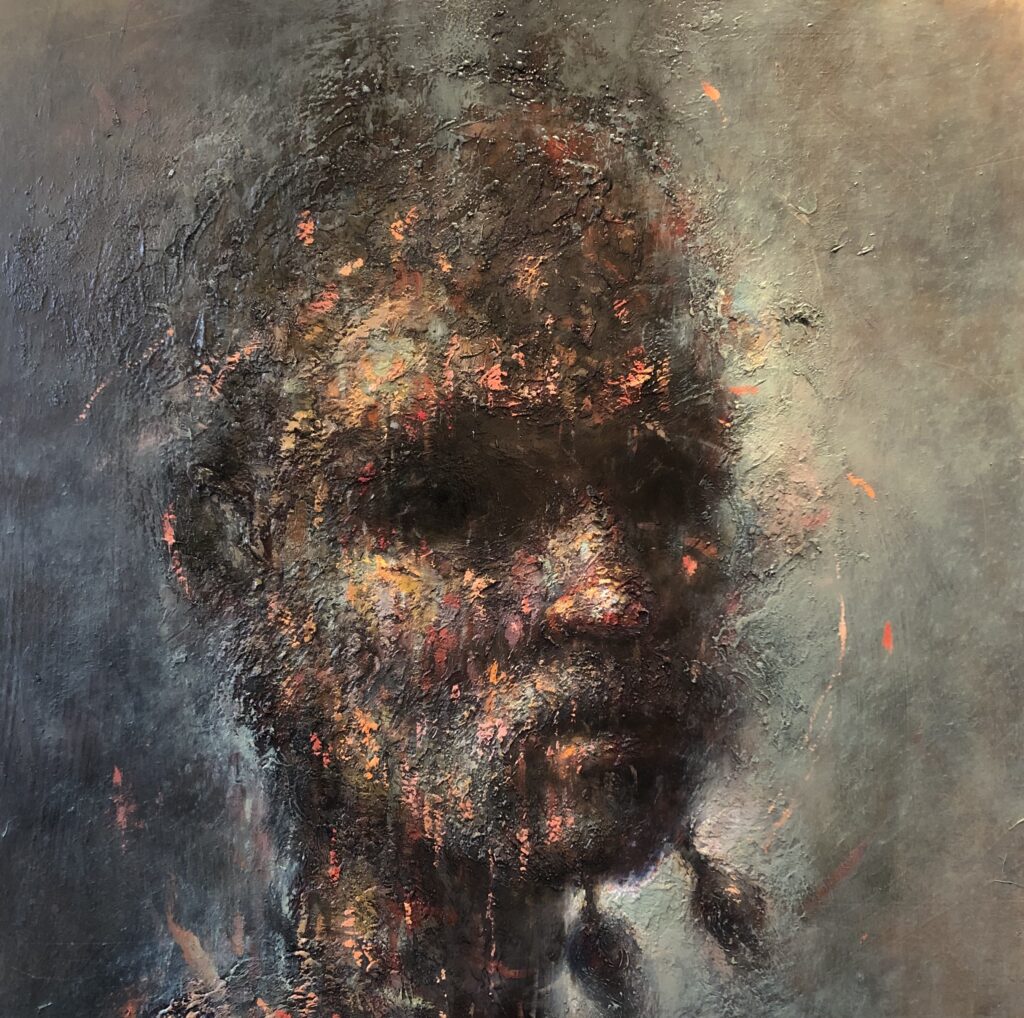
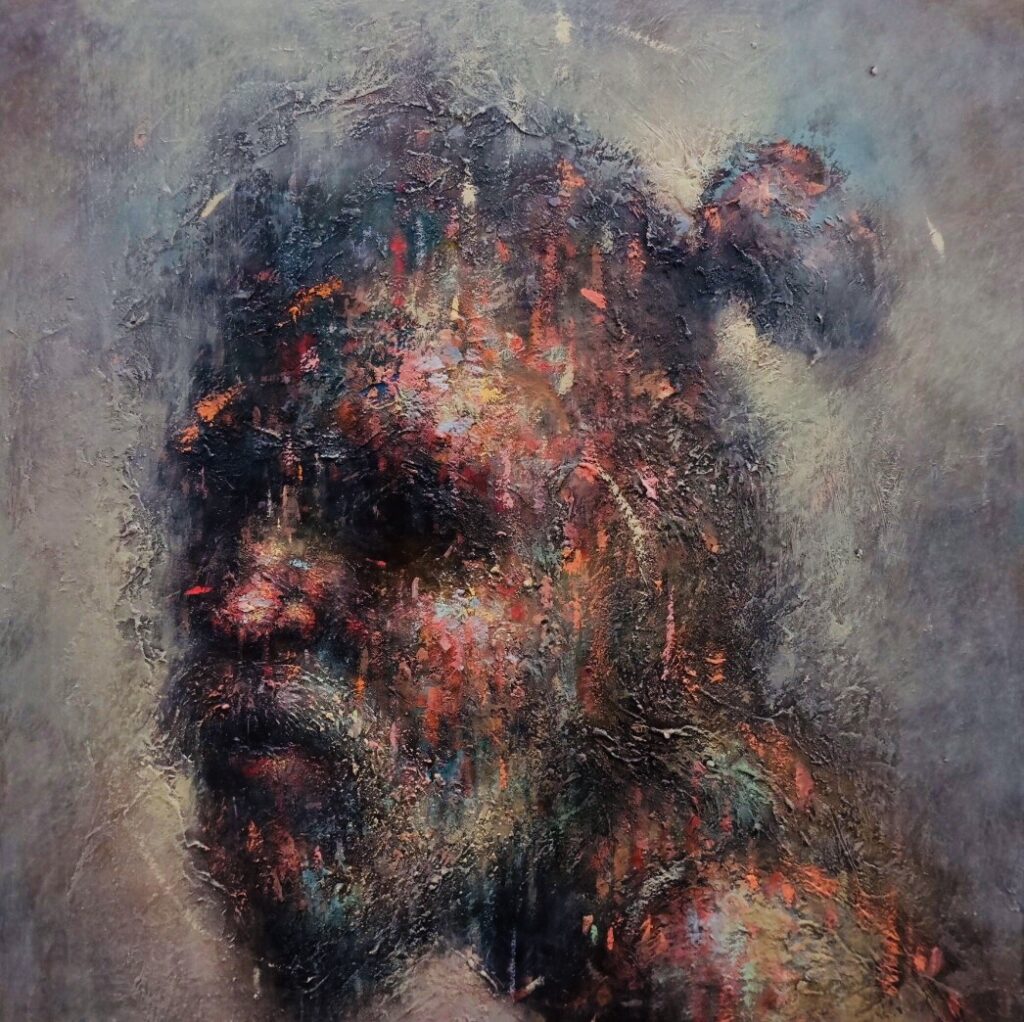
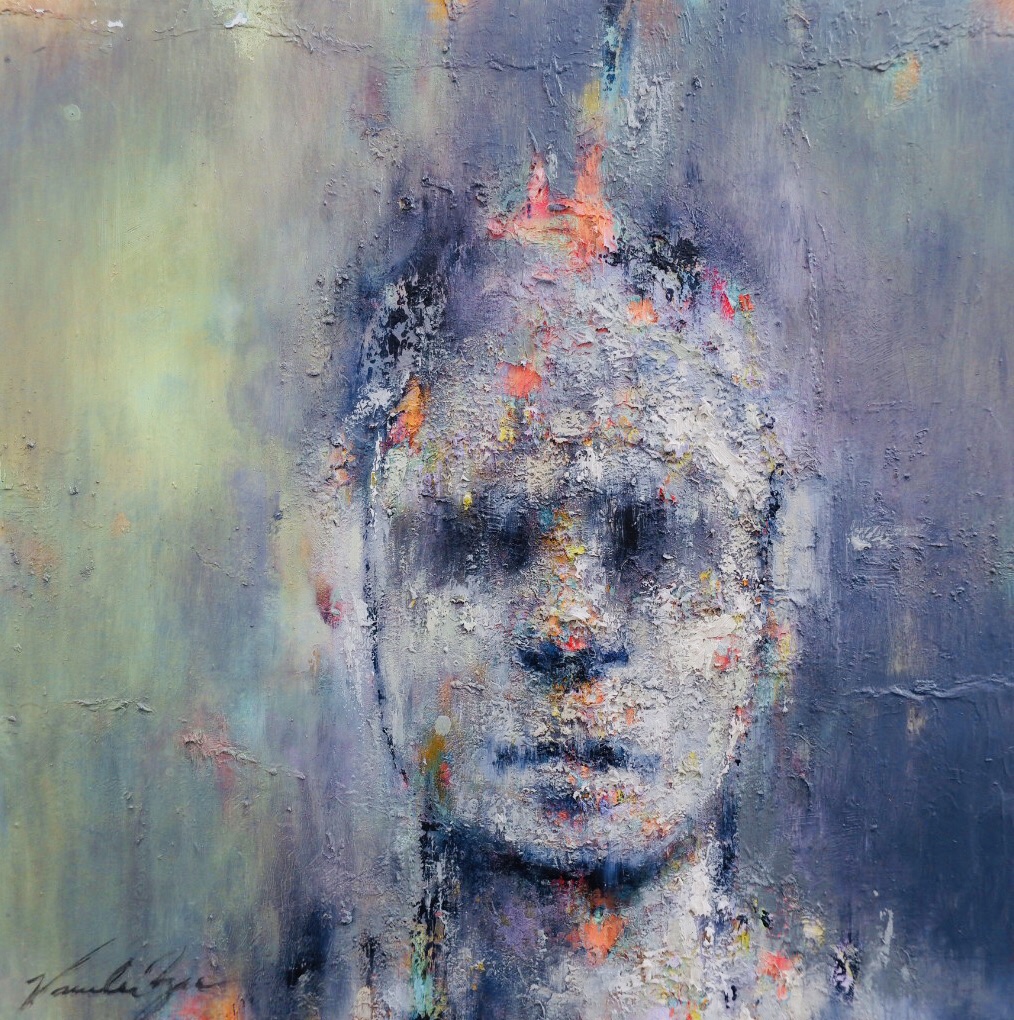
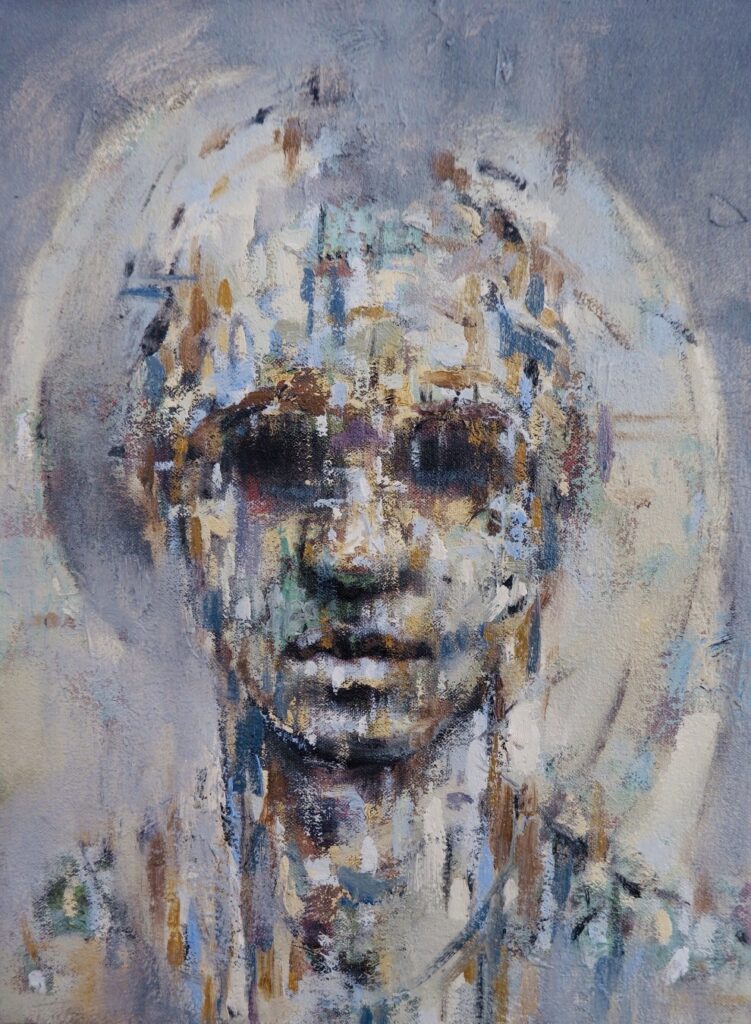
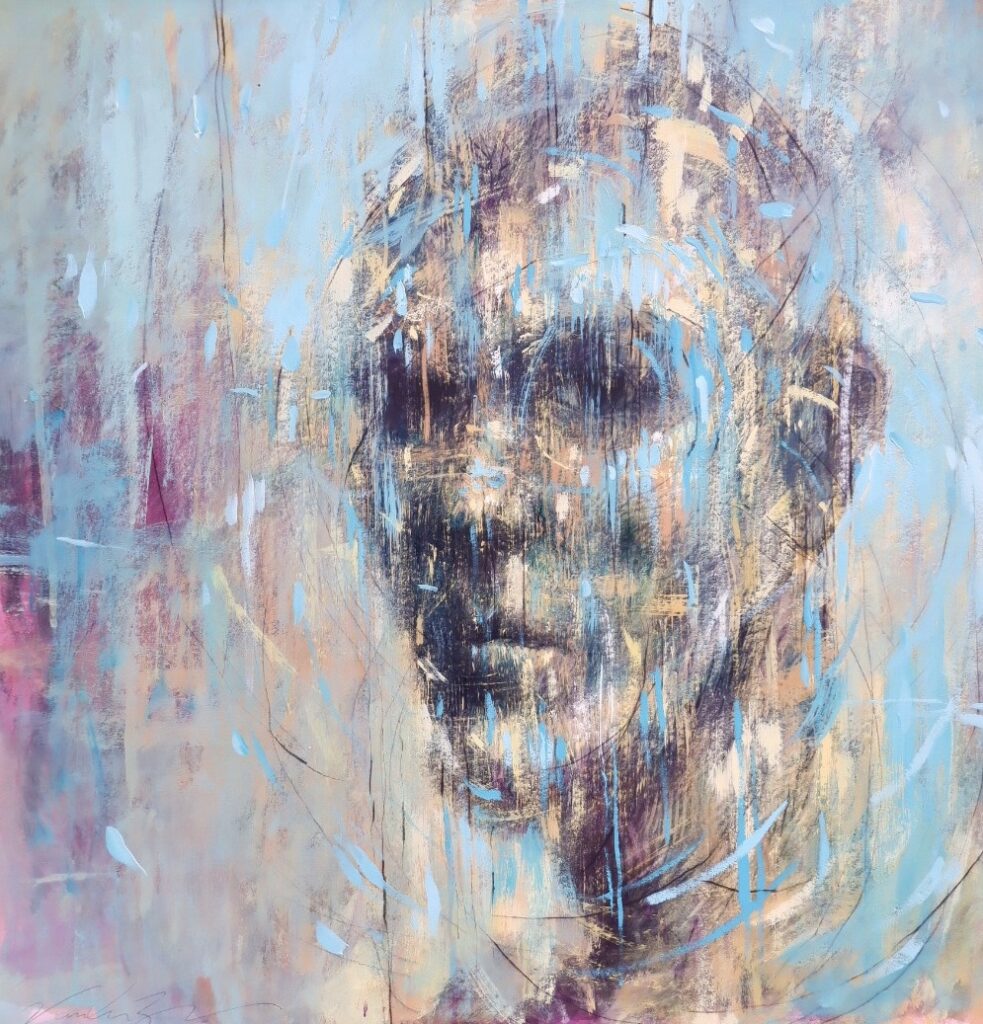
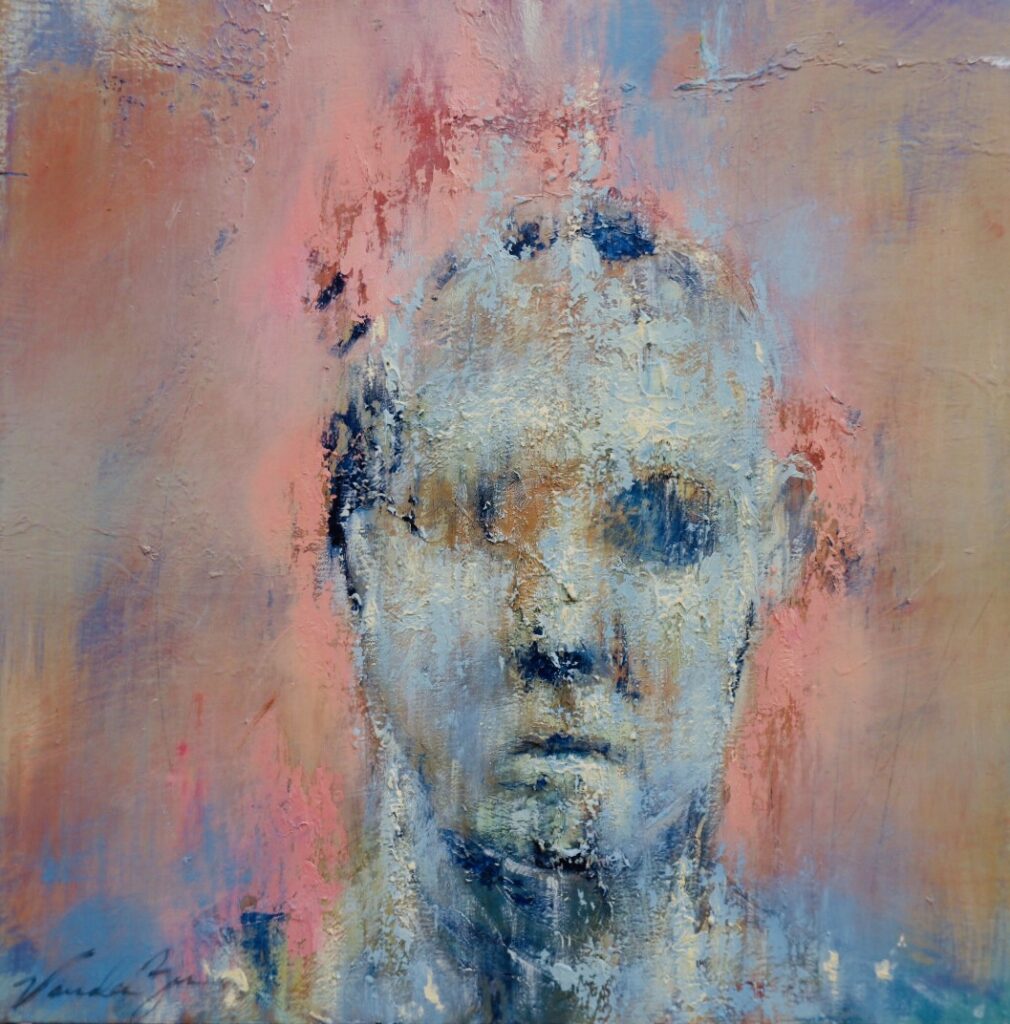
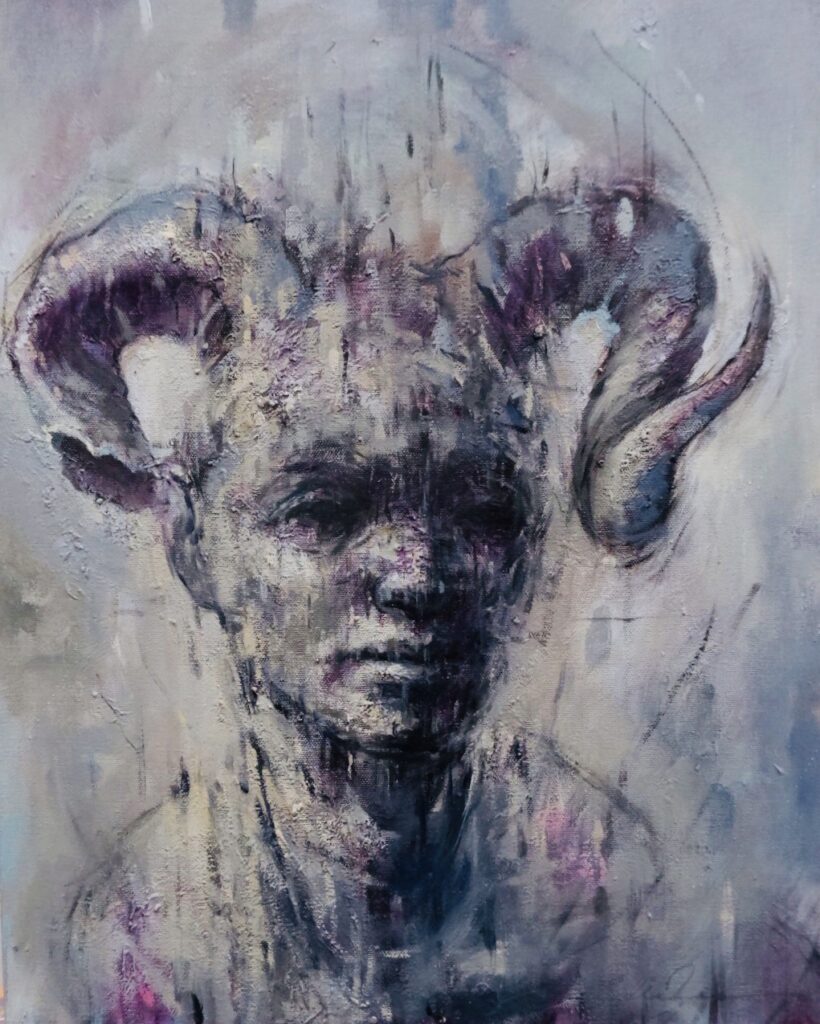
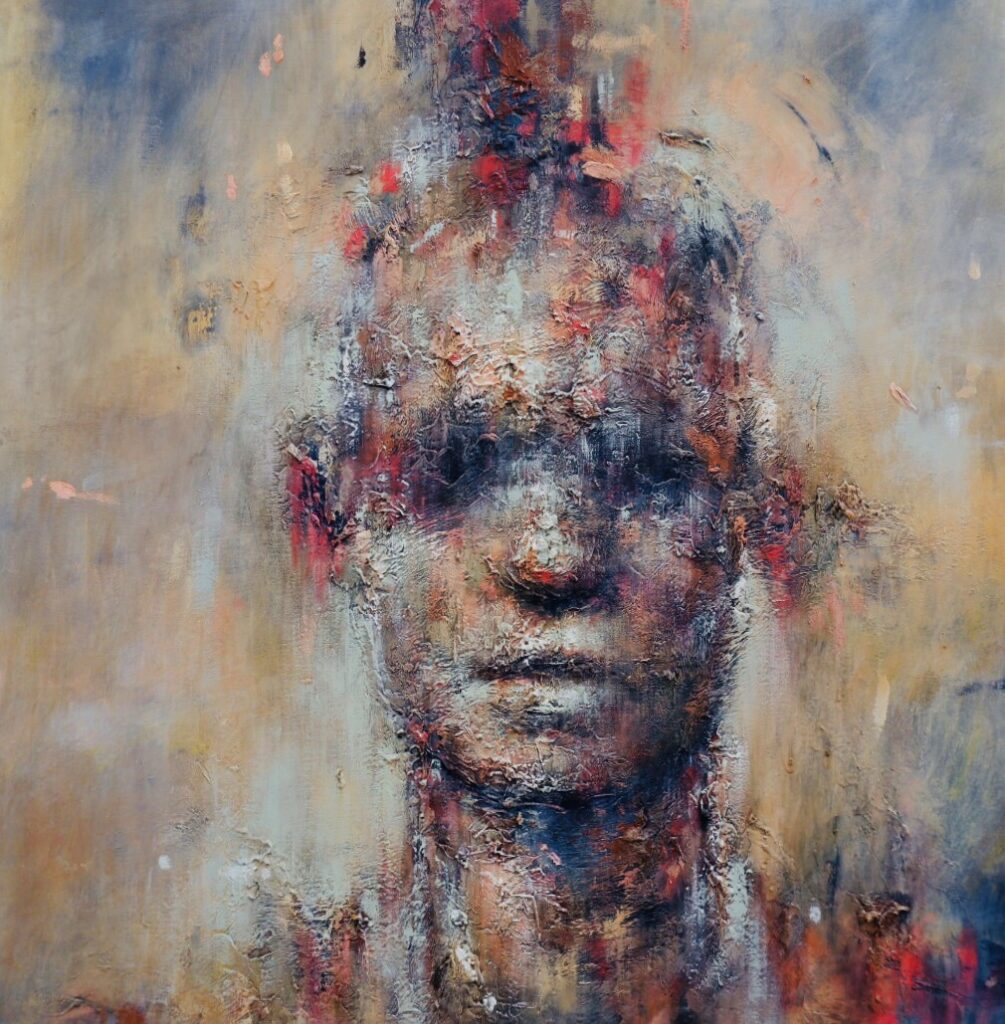
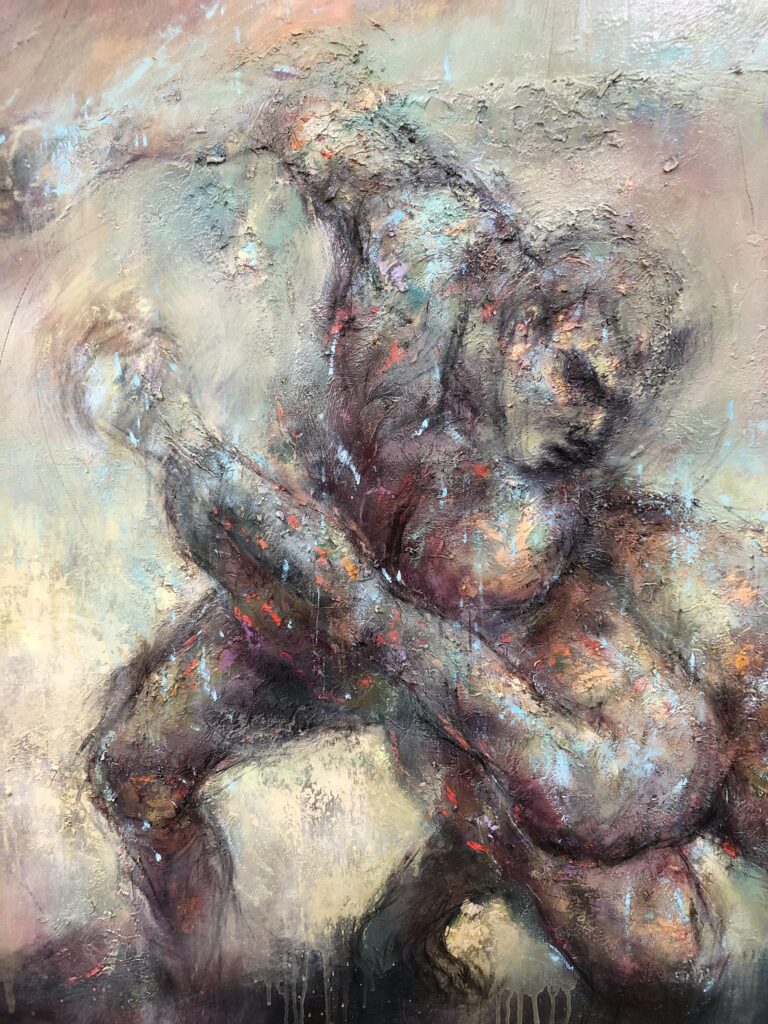
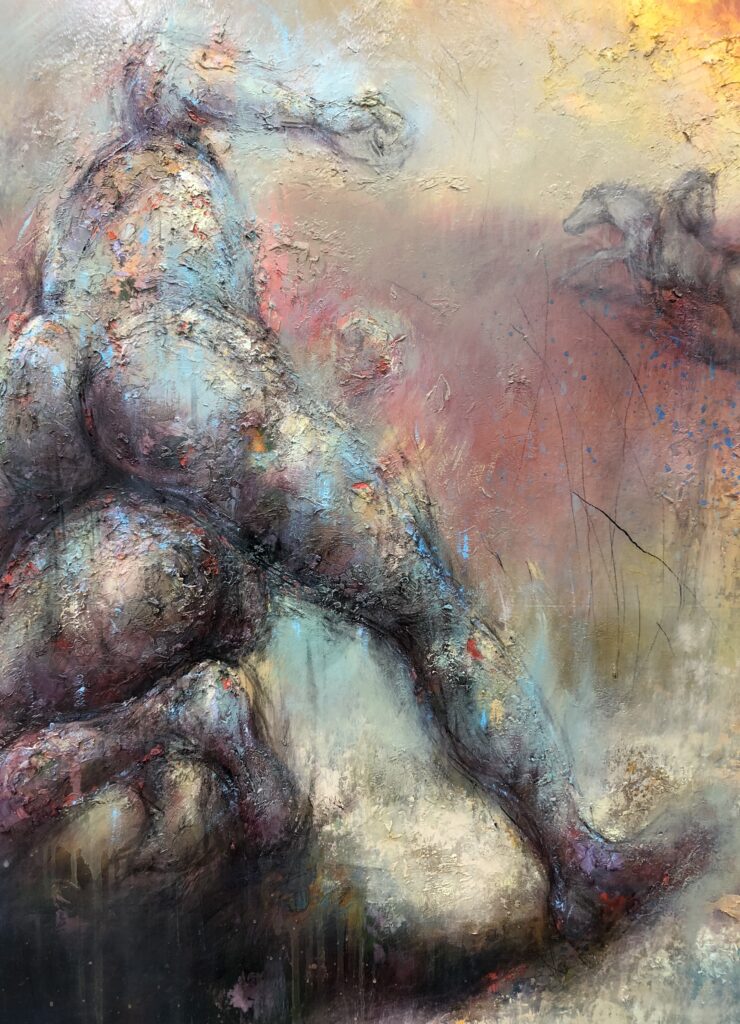
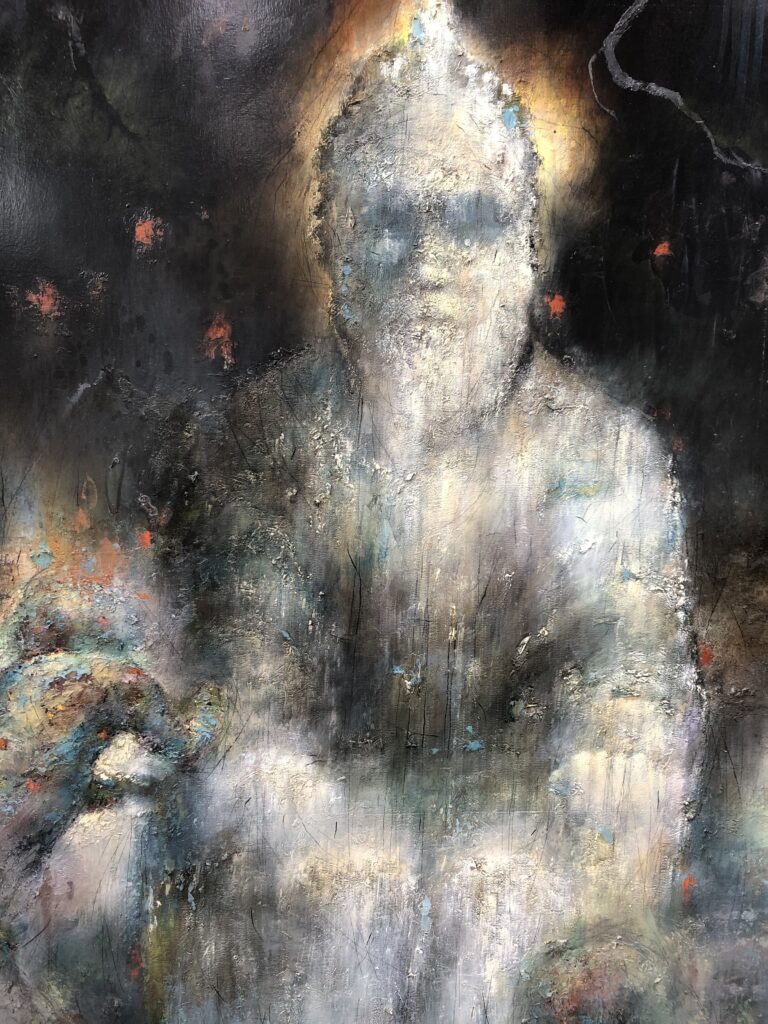
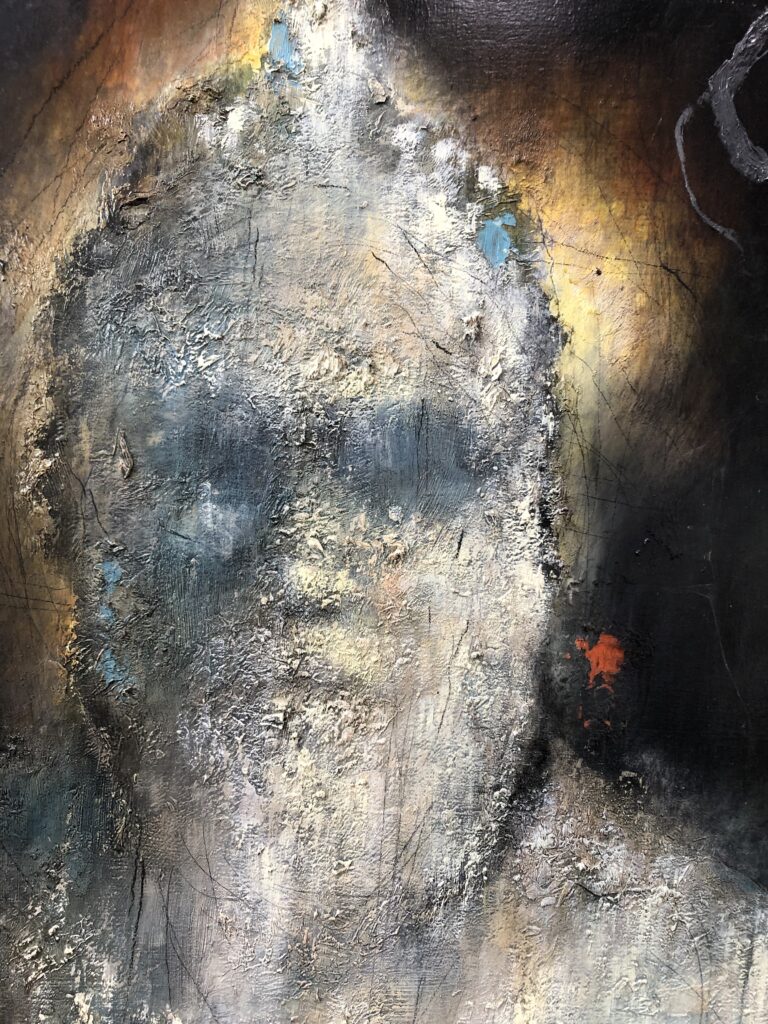
In Masks, Myths and Man, Vander Zee explores our human depths and fragility while simultaneously connecting us to our theist past of nature-based deities and myth-haunted lands. He wants to engage in the world that once held so much mystery, awe and inspiration. It was a world wide open for the human imagination – a world to be explored and revered, cherished and honoured. He uses layers layers of thick paint & color to slowly reveal the deeper parts of our humanity that seem to lay dormant-just under our skin-while we allow our distractions to go unchecked in our modern world. He uses his paint to coax us back to a slow and calm examination of what we may have lost of ourselves both personally and as a world culture. In his “Broken” series, he uses bestial horns to tie his characters to a mythological presence. The young men in these portraits represent the “brokenness” many gay men feel as they face the societal and social cruelties that tear at their self-esteem and feelings of wholeness and self-acceptance. While on the outside, the gay community presents itself as celebratory and happy that we are finally finding an acceptance within society. Many men find that the damage incurred during their youth has many life-long consequences. He also has various types of masks to show his characters hiding or revealing the hidden parts of themselves.



Luminescence
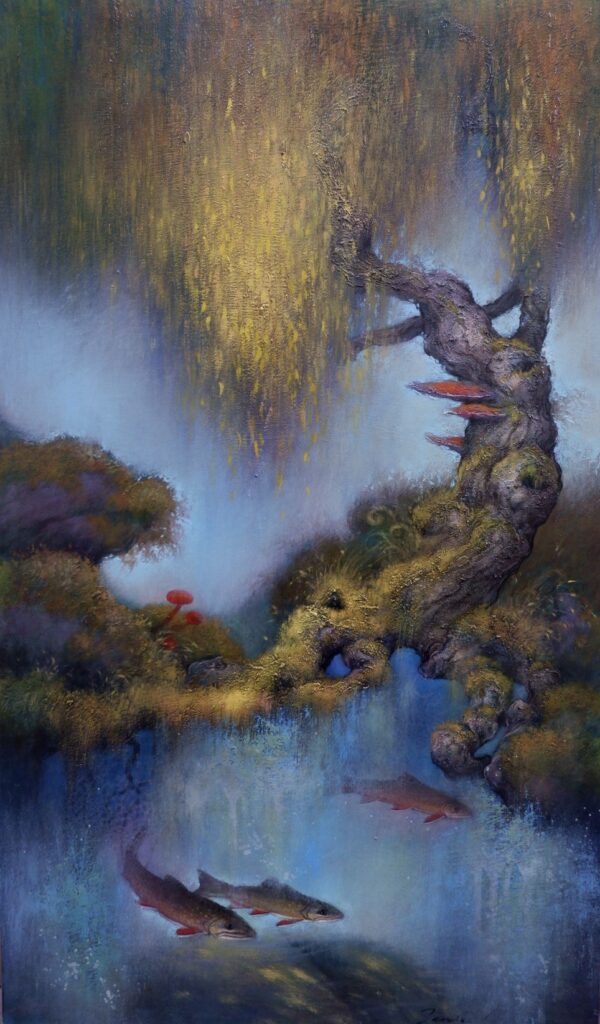
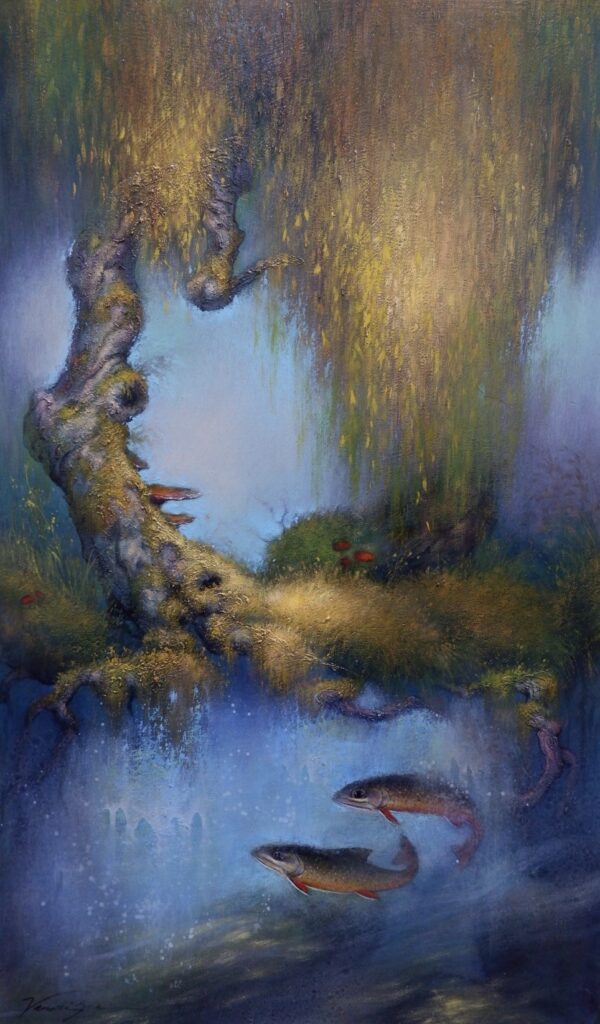
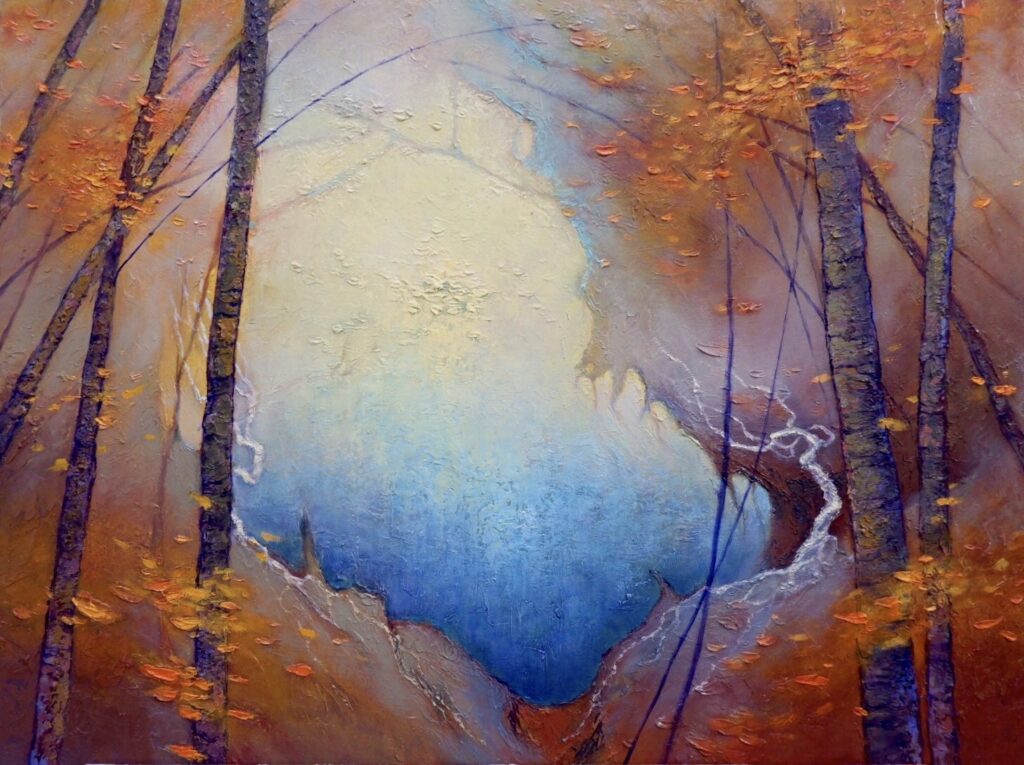
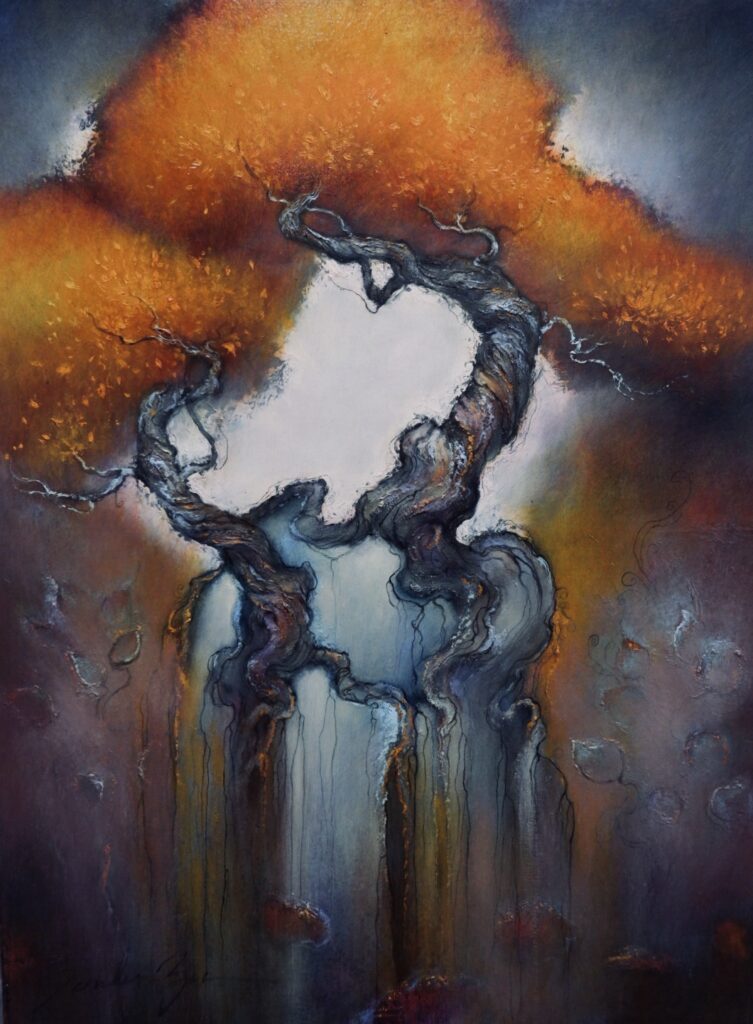
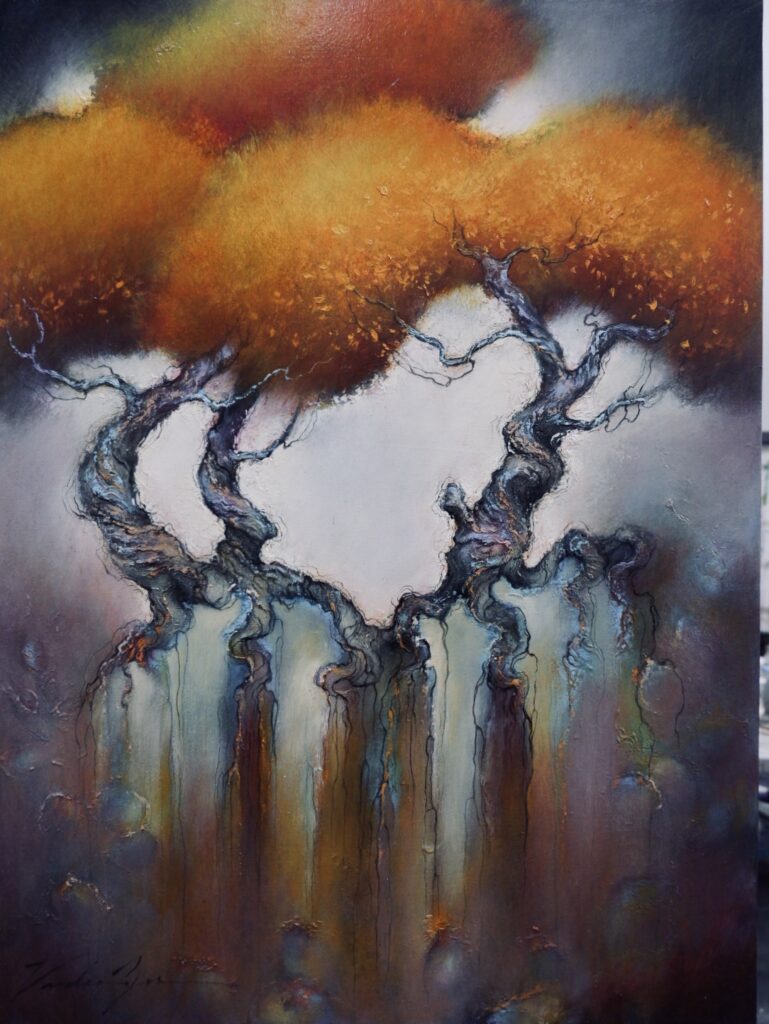
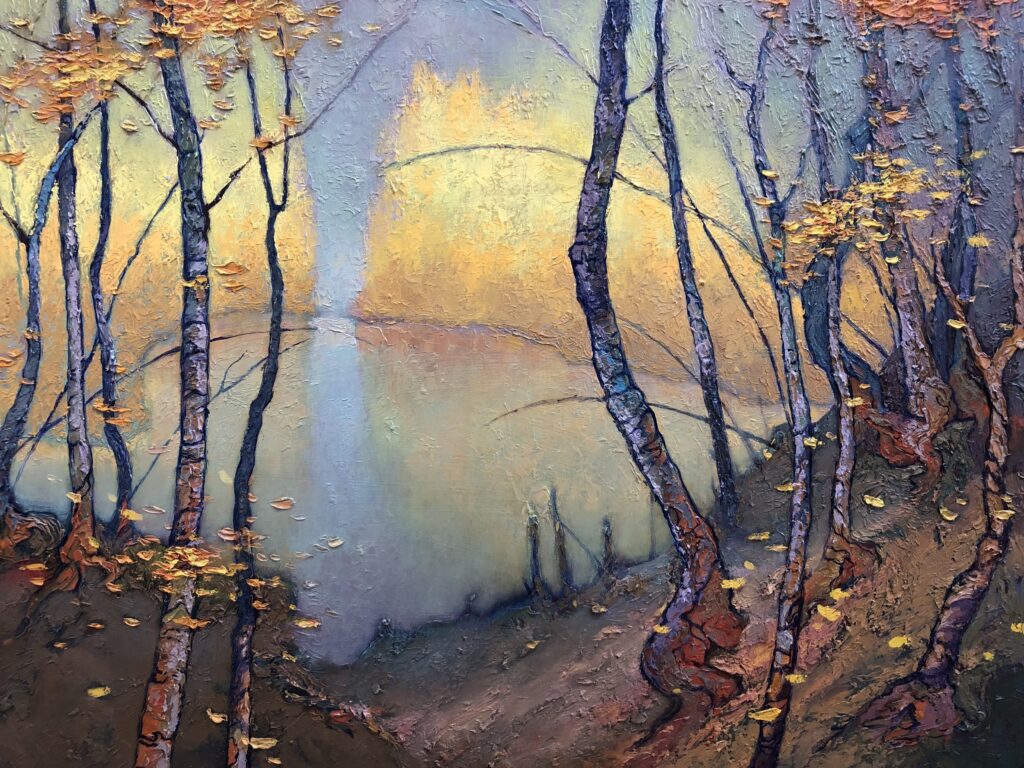
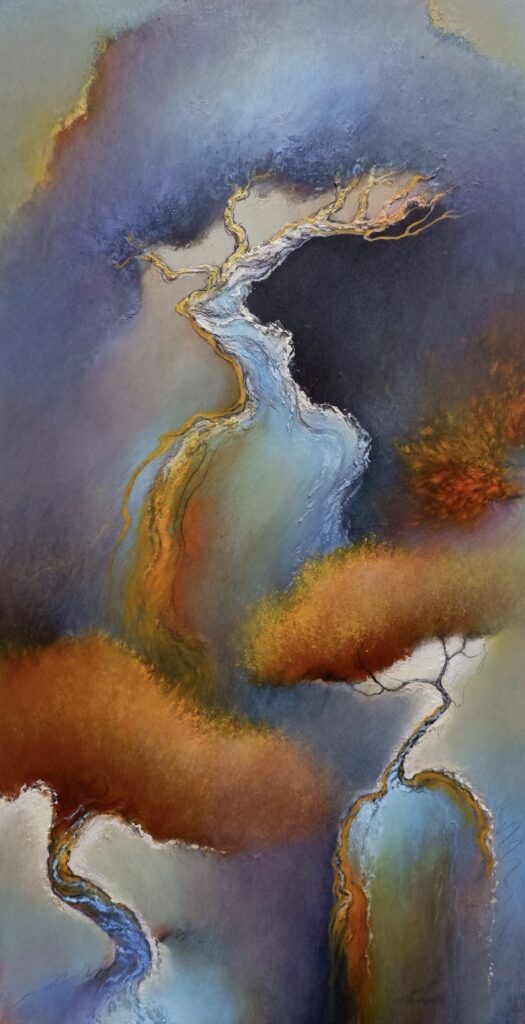
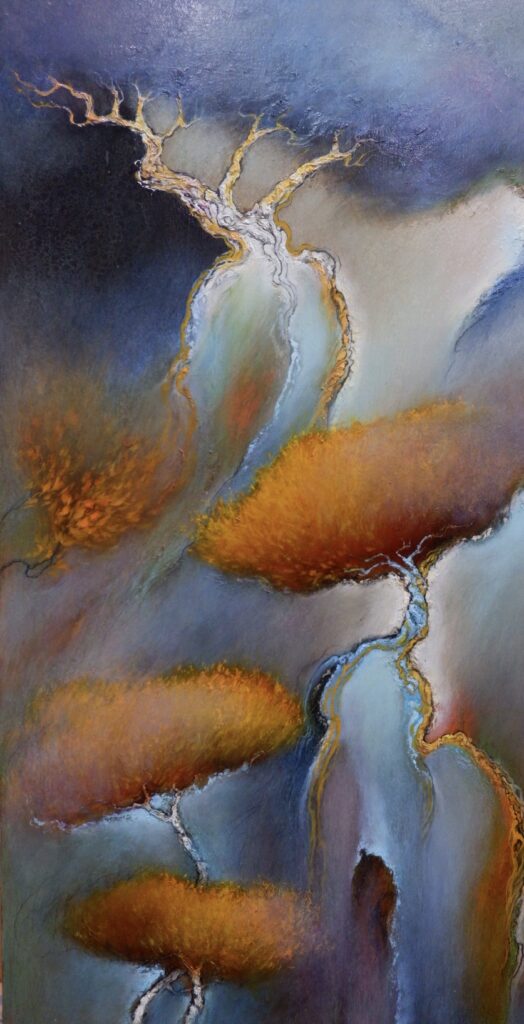
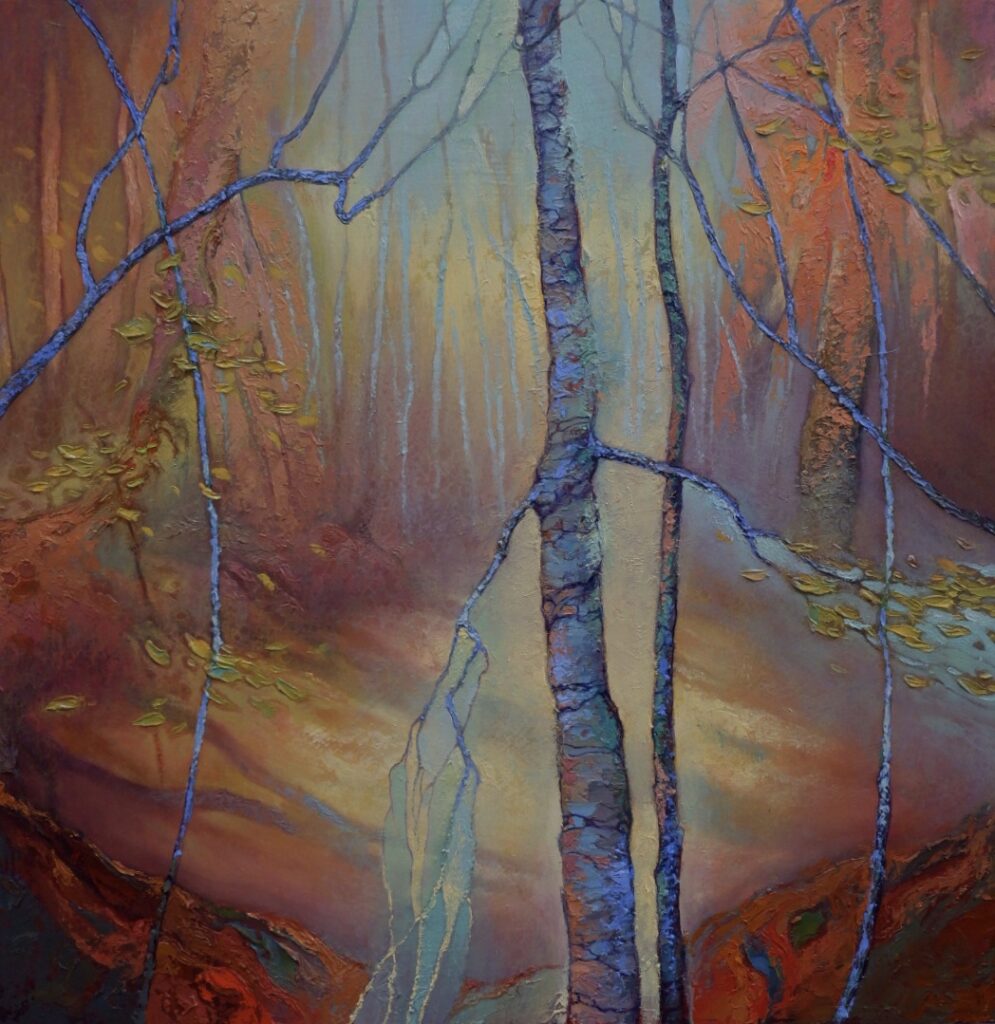
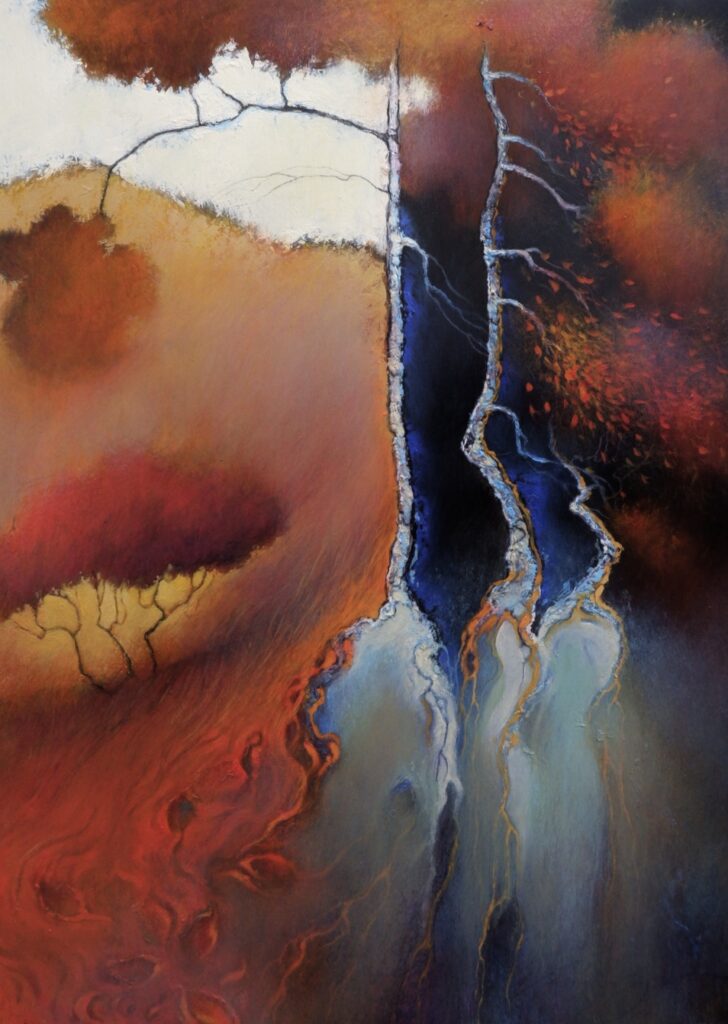
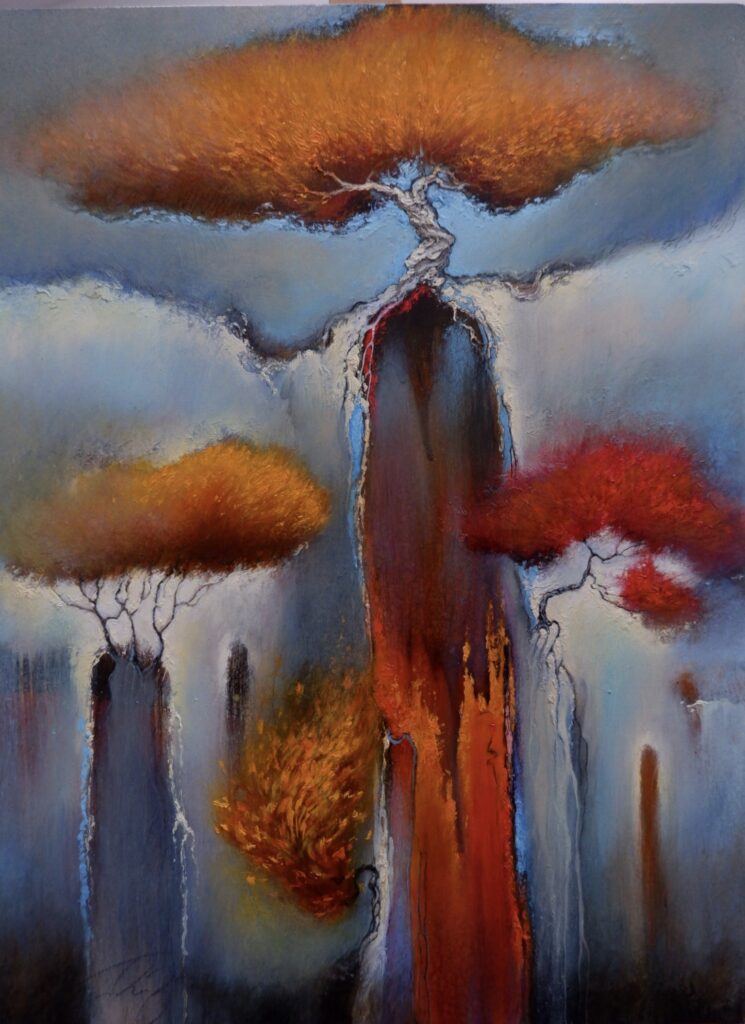
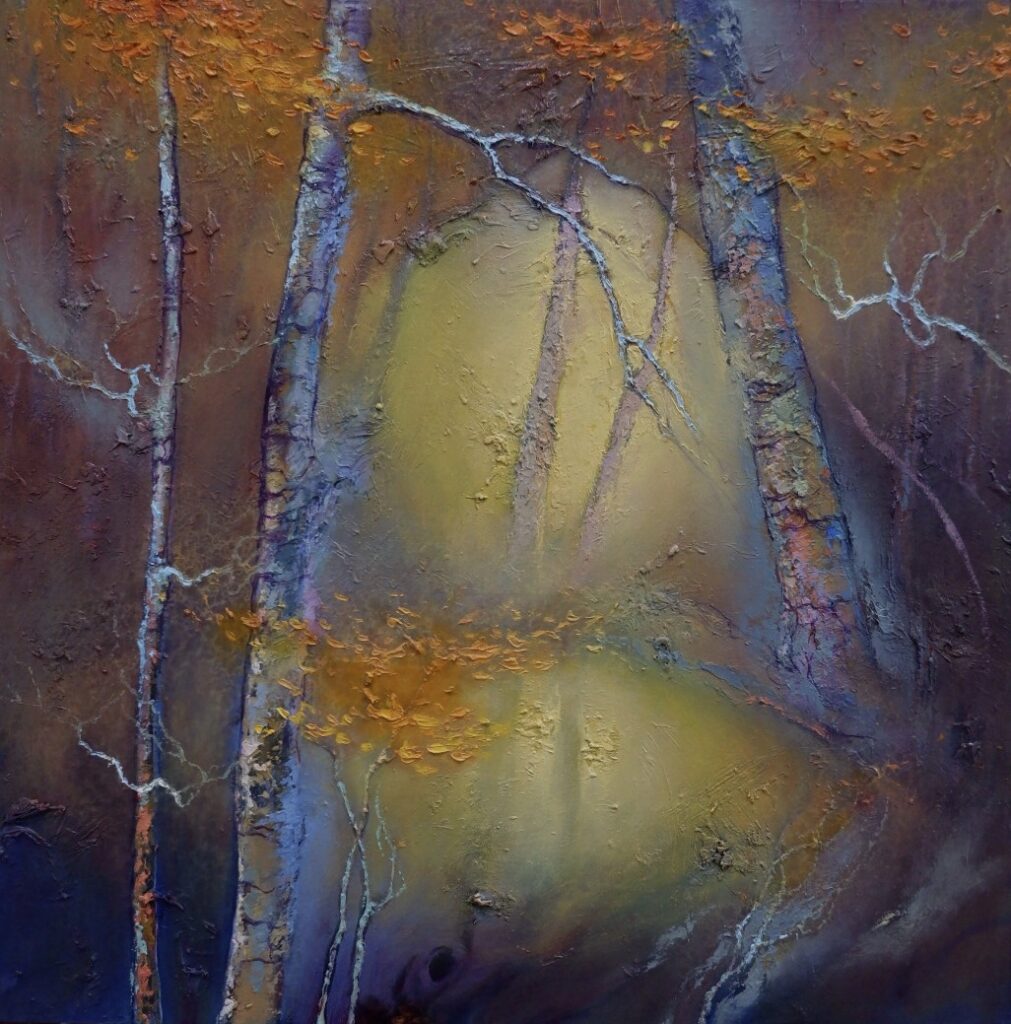
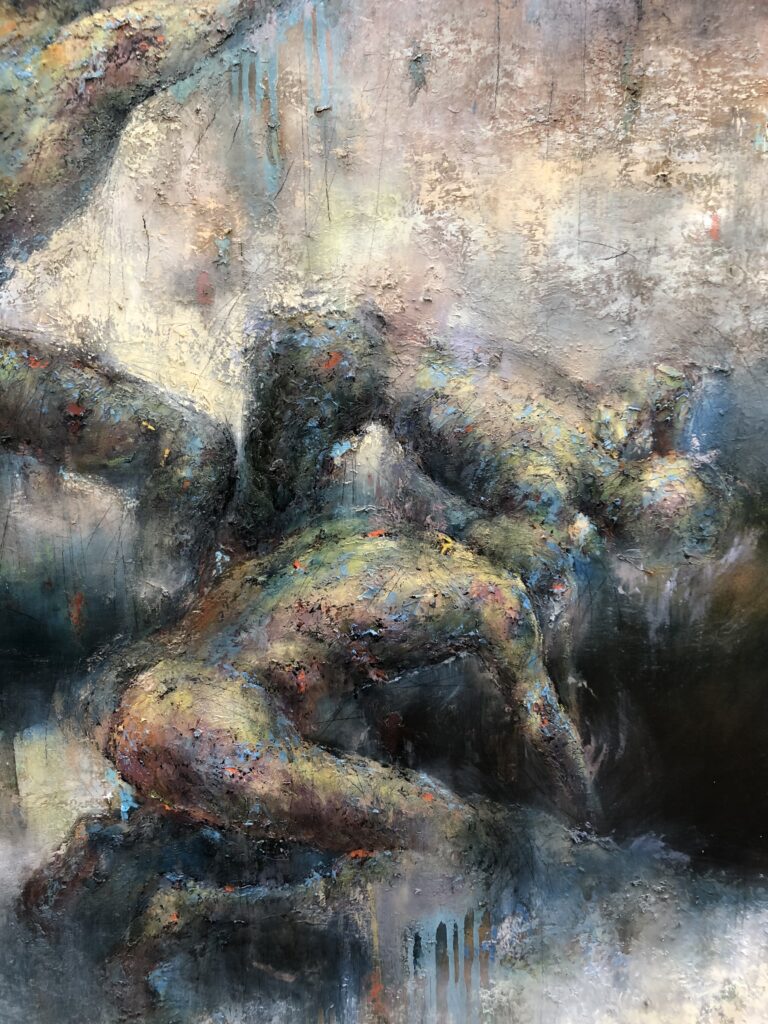
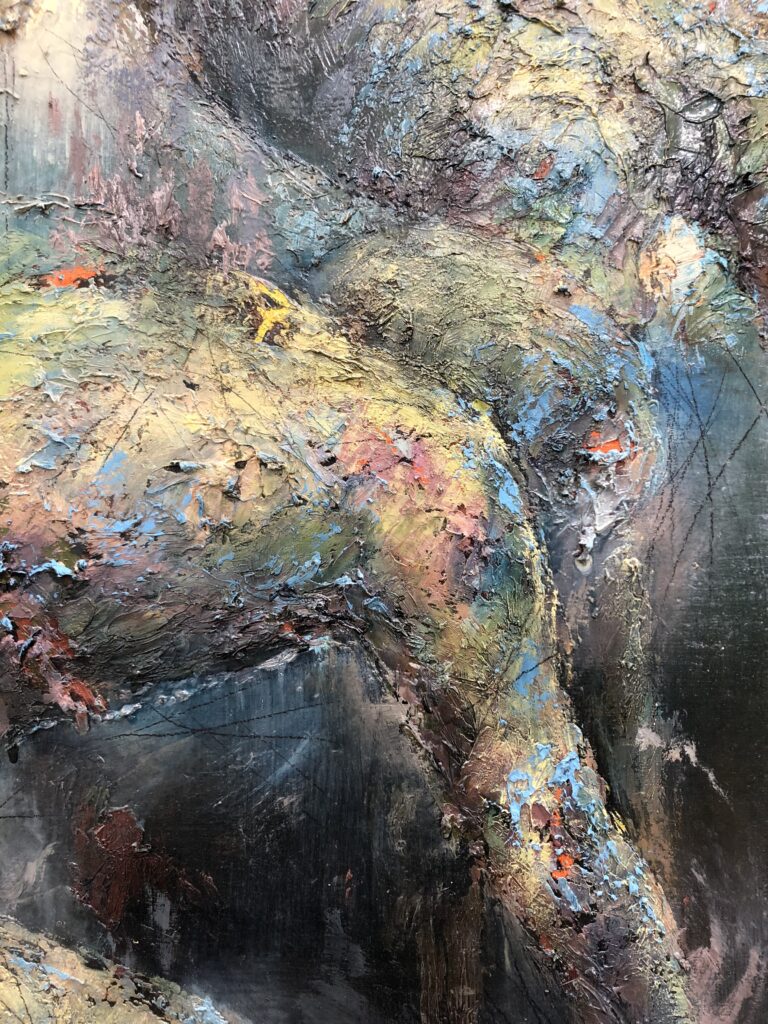
In “Luminescence”, Vander Zee reveals to us the light and harmony we find in nature while unearthing darker moods and depths as he takes us underground. The viewer seeps into the earth, drawn in by flashes of hot and cold colors, vines and roots that seems to search for the essence of beauty itself. While there, we float in liquid pools and cool underground rivers. We dwell amongst the fossils and elements that reveal to us our primal past. Vander Zee offers us a view into this world that connects us to the source of our beginnings and existence. He draws his inspiration from the land on which he lives – the glacier carved ravine that flows through the land near his wilderness home. The steep ravine reveals gnarled tree roots, native artefacts and ice-age fossil deposits. These are the elements that haunt his imagination as he visually explores and creates.